Såpebrukslyckan 1902-1906
The area north of Tivolitorget was known as Såpebrukslyckan, and this is where Halmstad’s sporting history began in...
Games and physical activities have existed since time immemorial.
But if we want to pinpoint a specific year for the arrival of modern sport in Halmstad, we could choose 1843. That was the year Josef August Lagergren was appointed to organise swimming and gymnastics instruction. Here, we focus mainly on the early years of the sporting movement in Halmstad.
The area north of Tivolitorget was known as Såpebrukslyckan, and this is where Halmstad’s sporting history began in...
The sporting movement began to grow in the early 20th century. Both football and athletics had to make...
At a meeting of the City Council on 25 May 1921, it was decided to approve the construction...
Around the turn of the century, Halmstad was home to several strongmen who took part in wrestling. Their...
Athletics, then known as allmän idrott, found a home in Halmstad in 1895, when Idrottsföreningen Kamraterna was founded.
At the turn of the century, Halmstad and IFK Halmstad’s great athlete was gymnastics instructor Hjalmar Mellander.
An article about Josef Lagergren can be found under Portraits.
Interest in swimming instruction was revived in 1858, when Halmstad Swimming Club was founded.
“A Lawn Tennis Club has just been formed in Halmstad.”
Gymnastics began in Halmstad in 1843, when the town’s new public baths opened.
Halmstad Rowing Club was founded in 1889.
In 1909, Halmstad’s first proper sports ground was inaugurated at Sommarlust, with a football pitch and running tracks.
Folkrörelsernas arkiv contains several interesting team photographs of football clubs that are now unknown.

The area north of Tivolitorget was known as Såpebrukslyckan, and this is where Halmstad’s sporting history began in the late 19th century.
The name comes from the soapworks that once stood here and closed in 1840.
A club called Halmstads Bollklubb played football here and, in 1890, faced Copenhagen’s Akademie Boldklub in the first international football match in Sweden.

In the centre is Tivoliparken, with Såpebrukslyckan at the northern end. Map from 1878.

The chestnut avenue, where the 400-metre race started at Norra vägen.
In 1902, Såpebrukslyckan was laid out as a sports ground. It was a very simple facility. The uneven, tussocky field was marked out with chalk for running tracks and areas for jumping and throwing events. A grandstand was built along one of the long sides, and the whole area was enclosed by ropes. Idrottsföreningen Kamraterna trained in athletics here and organised competitions.
When the Grammar School opened in 1906, the athletes were left without a place to train. Anders Grahm, the tenant farmer at Patrikshills Farm, came to their aid by making land on the farm available. This led to the establishment of Södra idrottsplatsen, which was probably located north of what is now Patrikshillsvägen.
A photograph from 1908 shows a football match in progress, but there must also have been running tracks, as a district championship in athletics was held there.

Football match at Södra idrottsplatsen, 1908.
Sources:
Sven Aremar. Ur folkmun och arkiv. Norra förstaden – nyttigheter och muntrationer
GHÅ 1977. P. G. Bergström. ”Vår Mellander världens styvaste idrottsman”.
GHÅ 1978. P. G. Bergström. På den tiden Ernst Wigforss idrottade.
GHÅ 2010. Bertil Karlsjö. Glimtar ur Halmstads tidiga idrottshistoria
IFK Halmstad 1895-1985

The sporting movement in Halmstad began to grow in the early 20th century. There was no proper sports ground, so both football and athletics had to make do with very basic facilities.
Then Christian August Freckman came to the rescue. A great supporter of sport, he believed it played an important role in educating and developing young people. He offered to build a sports ground at his own expense at Sommarlust in Furet, the forerunner of Folkparken.

Competitions at the Sommarlust sports ground.

IF Kamraterna’s tennis section at Sommarlust.
Work began during the winter of 1908, when a large number of trees were felled on the site of what is now the car park. During the spring, the sports ground was completed with running tracks and facilities for jumping and throwing, as well as a football pitch. A tennis court was also built among the trees.
On Sunday 13 June 1909, the sports ground was officially opened in the presence of around 4,000 people. Bank clerk Axel Jonasson gave a speech and thanked Freckman for his great contribution to sport.

Wrestling at Sommarlust.

Paired running at Sommarlust.
Several of Sweden’s leading athletes took part in the sporting competitions. The best known was Eric Lemming, a javelin gold medallist at three Olympic Games and a world record holder. Other prominent competitors included marathon runner Torild Olsson and pentathlete Hugo Wieslander.
At Sommarlust, Eric Lemming set a world record for the left-handed javelin throw, with a distance of 42.02 metres.
The sports ground at Sommarlust continued to be used until 1922, when Örjans Vall was inaugurated.
Sources:
Sven Aremar: Kors och tvärs i tid och rum. Hur halmstadbon roade sig.

In the early 1920s, unemployment was widespread in Sweden, and the government decided to introduce measures to create jobs. One such measure was to provide grants for the construction of sports grounds.
A proposal to this effect was submitted to Georg Bissmark, Mayor of Halmstad and chairman of the town’s Unemployment Committee. Various locations for a sports ground were discussed, and the chosen site was the so-called Magistrate’s Lands, beside the River Nissan, north of the Higher General Secondary School, which today houses Engelska Skolan.
At a meeting of the City Council on 25 May 1921, it was decided to approve the construction of the new sports ground at a cost of SEK 105,000. A committee was appointed to oversee the project.
City Engineer Ragnar Lyttkens was responsible for the technical aspects.
Pharmacist Carl Larsson served as the committee’s sports expert and secretary.
Architect Uno Forthmeiier drew up all the plans for the buildings free of charge and supervised their construction.
Director of Parks Albert Bissmark prepared all the planting plans free of charge, oversaw the landscaping and donated large quantities of plants from his nursery.

The sports ground nearing completion. Photo from Folkrörelsernas arkiv.

A newly built Örjans Vall, with the football pitch and tennis courts to the right. Photo from Folkrörelsernas arkiv.
The earthworks were a major undertaking. Large quantities of soil had to be moved to create the pitches, tracks and terraces. The football pitch was laid out to the highest standards, using top-quality topsoil. The athletics tracks were constructed with steam-engine slag as the foundation and a layer of cinders on the surface. The tennis courts were built in the same way as the path at Högelid, using stone dust, gravel and soil, making them both durable and as hard as cement. All the work was carried out by relief workers, without the aid of any major machinery.
When the sports ground was completed in July 1922, it covered 41,000 square metres. The entrance was built of handmade brick, with trellises and climbing plants around the pillars bringing the brickwork to life. The gates were forged by local craftsmen, as were the two lanterns outside, donated by directors Pehr Berggren and Axel Nordlöf.
The sports ground was officially inaugurated on 30 July 1922 by His Royal Highness Crown Prince Gustaf Adolf. Many considered the event the largest gathering held in the town since the 1912 exhibition.

HRH Crown Prince Gustaf Adolf at the inauguration of Örjans Vall. Photo from Bildstationen.
The inauguration was due to begin at two o’clock in the afternoon, but by midday people were already streaming towards the sports ground. The whole town seemed to be on the move. Special trains brought visitors to Halmstad from all directions. Three special trains alone arrived from Nässjö, carrying around 3,000 people.
Everyone coming from the east side of the River Nissan had to cross Österbro, and chaos broke out at Wallberg’s Corner (the junction of Storgatan and Brogatan). The police struggled to keep the traffic under control, as the country people arriving on foot were said to have difficulty following the traffic regulations.

Photo from Folkrörelsernas arkiv.
There were 12,000 spectators inside the sports ground, while crowds stood packed around the fence outside. Several thousand more people had gathered on the slopes of Galgberget, where they could watch the spectacle from a distance.
The inauguration was a grand affair. The Halland Regiment’s band gave a concert and sounded fanfares. More than 100 athletes from all over Sweden marched onto the field carrying banners and lined up in front of the main stand, where the Crown Prince was seated.
After the inauguration came a programme of athletics, featuring visiting stars as well as local talent. There was Björneman from Kalmar, Viberg from Malmö, Branting from Stockholm and Nilsson from ÖIS. Halmia was represented by Sidon Ebeling, who won the 5,000 metres, and his clubmate Yngve “Japan” Johansson, who collected most of the prizes presented by the Crown Prince.

Photo from Bildstationen.
Sources:
Sven Aremar. Halmstad, Kors och tvärs i tid och rum. Så fick Halmstad Örjans Vall
GHÅ 1997. Sven Aremar, Örjans vall 75 år

Around the turn of the century, Halmstad was home to several strongmen who took part in wrestling and athletics. Their performances and wrestling bouts were a popular form of entertainment, drawing large crowds to the town’s various places of amusement.
The inspiration for our local strongmen came from professional wrestlers and athletes who travelled around the country performing in the late 19th century. One evening in September 1895, for example, crowds in Halmstad flocked to the Riding School in the north of town to see the Swedish athlete A. B. Andersson demonstrate his skills. He had come directly from Copenhagen’s Tivoli, where he had defeated a Danish champion named G. Jensen. He was said to have first thrown his Danish opponent, then juggled with weights, and even lifted a horse and a couple of fully grown men.
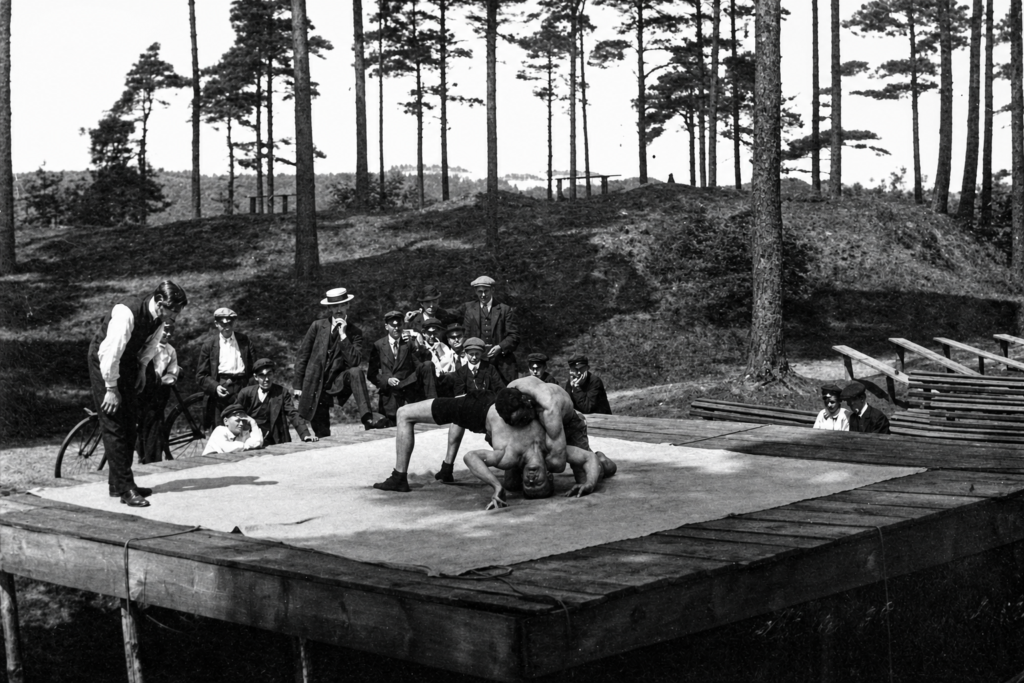
Wrestling match at Sommarlust, 1909. Valdemar Olson pins Reinhold Rehngren.
Photo from BK Allians in Folkrörelsernas arkiv.
As early as 1895, there was an association of young men in the town called Halmstads Gymnastik- och Atletklubb (Halmstad Gymnastics and Athletics Club). The club remained active into the early 20th century. Among its members, and also serving on its governing body, was Anders Malmberg, whose day job was delivering beer by horse and cart for Östra Brewery.
Knut Lydén
On Sunday 6 September 1896, an appearance at the Riding School was announced by Oscar Wahlund, described as the strongest man in the world. A seasoned traveller, he was well known throughout half of Europe and across America. Wahlund offered a prize of SEK 1,000 to anyone who could defeat him in wrestling.
Locomotive stoker Knut Lydén, who lived on Tullgatan in Öster, took up the challenge. The first round ended in a draw, but in the second Lydén managed to pin his opponent. To great cheers, the audience left their seats and gathered around the wrestlers, who were lying on the floor with Lydén on top.
The celebration was short-lived, however. In the final round, Lydén came crashing to the floor with a thud.
Anders Malmberg
On 10 February 1903, Hippodrome Circus pitched its tent at Fredriksberg on Norra vägen. Among its performers was the master wrestler Oscar Sandberg from Helsingborg. Anders Malmberg had entered the wrestling competition at the circus’s opening performance.
The evening began with weightlifting. Oscar Sandberg, whose chest was covered with medals, won by pressing a barbell weighing 85 kilos overhead no fewer than 14 times. In the wrestling match, Malmberg managed to throw Sandberg twice, but in the end he was himself pinned to the floor.
In 1903, another muscular man appeared on the scene and challenged Anders Malmberg’s reputation as the town’s strongest weightlifter and wrestler. His name was Isak Antonius Johansson, born in Veinge in 1878. During his time in Halmstad, he was given the stage name “Starke Isak” (“Strong Isak”), and made a living as a part-time firefighter.
But Halmstad proved too small for Isak Johansson. He emigrated to America, where he joined the ranks of professional wrestlers and strongmen who toured the country. There he was given the stage name “The Terrible Swede”.

Starke Isak Andersson. Photo from Bildstationen
In 1911, he returned to Halmstad, where prizes were offered to anyone who could defeat him. The performance began with “Starke Isak” carrying two men on his little finger. He then tore apart two and a half packs of playing cards and straightened a horseshoe.
In the main bout, Isak faced his old friend, beer deliveryman Anders Malmberg, who managed to stay on his feet for just five minutes. There were loud protests from the defeated Malmberg, who objected to Isak using American wrestling techniques and twisting his arm up behind his back.

Wrestling match at Sommarlust in 1912 between “Starke Ivar” Johansson and Otto Andersson. Photo from Folkrörelsernas arkiv.
During the 1912 Arts and Industrial Exhibition, a wrestling arena was built at Sommarlust, and Isak Johansson returned to Halmstad from America. After Isak Johansson defeated Otto Andersson, who was also a professional wrestler in America, Isak was challenged by Albert J. Carlsson from Kärleken, who had likewise worked as a professional wrestler in America.
“Cyclone” Carlsson offered his opponent Isak Jonsson 100 kronor if he failed to pin him twice within an hour.
The match was moved to the exhibition’s amusement park at Tivolitorget, where 5,000 spectators gathered. Despite the Kärleken man giving it everything he had and putting Isak in several difficult situations, the bout ended in a draw.
The people of Halmstad demanded a decisive result. A rematch was arranged at Tivolitorget. Several thousand people turned up and, according to the Hallandsposten reporter, witnessed a wrestling match the likes of which had never before been seen in the town.
The struggle lasted for one hour and ten minutes, with the advantage shifting back and forth. But with a surprise combination of a “half Nelson and foot hold”, “Cyclone Burns” finally got the upper hand and pinned “The Terrible Swede”.

Halmstad Wrestling Club, 1918. Photo from Folkrörelsernas arkiv.
Sources:
Sven Aremar. Staden Havet Människorna. Stadens starka karlar.

At the end of the 19th century, IFK Halmstad’s athletes trained and competed both at Laxön and at Alfreds källa in Frennarp. At Laxön, the 100-metre race was run along a garden path. The runners started shoulder to shoulder, as space was very limited. After 50 metres, they turned towards a wall.
Longer races were held along a road near Alfreds källa, known as Stenkolsvägen. The 800 metres was run on a straight course. The 1,500 metres involved a turn, while the 3,000 metres went around the field and along a loop leading into Frennarpsskogen.

Alfreds källa
The sport of athletics, then known as allmän idrott, found a home in Halmstad in 1895, when Idrottsföreningen Kamraterna was founded. In 1902, a simple sports ground was created at Såpelyckan.

The 1902 Kamrat Championships were held here, with competitors from Malmö, Kristianstad, Helsingborg and Stockholm. The 400-metre race was run along Kastanjeallen, starting at Norra vägen. After passing the right-hand bend by Norra Cemetery, the finish was a little way along Badhusgatan.
The athletes ran in gym shoes on a shared track, and times were taken using ordinary pocket watches or alarm clocks.
When the Grammar School was built on the site of the sports ground at Såpebrukslyckan, IFK Halmstad moved its activities to the newly built sports ground at Sommarlust.
One event you would never see today was paired running, in which a man and a woman ran together while holding hands.

Paired running at Sommarlust

Hurdle race at Örjans Vall. Photo from Folkrörelsernas arkiv.
After the inauguration of Örjans Vall in 1922, athletics competitions were held, and the new sports ground became the venue for many track and field events.

Photo from Folkrörelsernas arkiv.
The sports ground at Örjans Vall was inaugurated in 1922. The man competing in the high jump is unknown, but during the 1920s Sven “Hönan” Gustavsson won Swedish Championship medals in the event.

Photo from Folkrörelsernas arkiv.

Photo from Folkrörelsernas arkiv.
In 1929, three clubs in Halmstad were involved in athletics: Halmia, HBK and IFK Halmstad. That year, IFK Halmstad took over the athletics activities from the other two clubs.
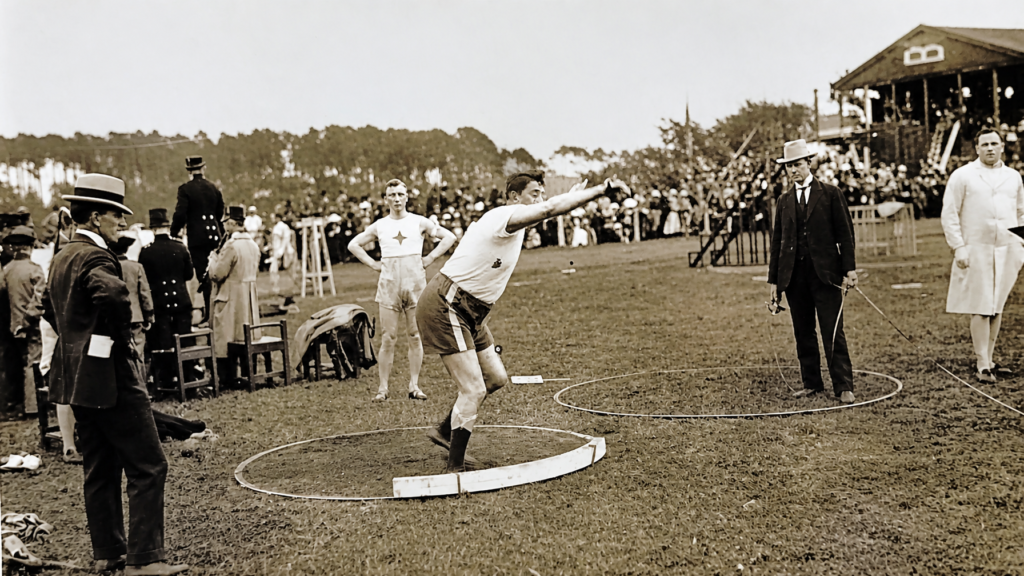
Photo from Folkrörelsernas arkiv.
Sources:
Sven Aremar. Ur folkmun och arkiv. Norra förstaden – nyttigheter och muntrationer
Sven Aremar. Kors och tvärs i tid och rum. Livet i slottsparken på 1910-talet
Sven Aremar. Kors och tvärs i tid och rum. Västra gärdet – stadskassörens lönejord
GHÅ 1977. P. G. Bergström. ”Vår Mellander världens styvaste idrottsman”.
GHÅ 1978. P. G. Bergström. På den tiden Ernst Wigforss idrottade.
GHÅ 2010. Bertil Karlsjö. Glimtar ur Halmstads tidiga idrottshistoria
IFK Halmstad 1895-1985

At the turn of the century, Halmstad and IFK Halmstad’s great athlete was gymnastics instructor Hjalmar Mellander. He joined Idrottsföreningen Kamraterna in 1899 and featured prominently in the prize lists at the championships held at Såpebrukslyckan in 1902. He also enjoyed considerable success in competitions at various venues around the country.

Hjalmar Mellander competing in the high jump, probably in Gothenburg.

Hjalmar Mellander with his medals, probably before 1906.
Photographer: A. J. Hagnell
After failing his student examination in 1902, he travelled to England, where he began working at a gymnastics institute in Liverpool while studying at the university there. He graduated six years later.
Every year, he returned to Halmstad to compete for IFK Halmstad in major national competitions. He competed in running, jumping and throwing events.
When an invitation to the 1906 Olympic Games in Athens arrived, Hjalmar Mellander was selected to represent Sweden. He won the gold medal in the pentathlon and was also awarded an honorary prize by the King of Greece. At these Games, Sweden won its first Olympic gold medals. A committee subsequently named him “the athlete at the Games who came closest to the ideals of the ancient Greeks”.

Hjalmar Mellander’s commemorative medal.

Hjalmar Mellander
Bank director Axel Jonason, who was chairman of Idrottsföreningen Kamraterna in 1909–1910 and was himself a talented athlete, wrote the following about Hjalmar Mellander:
“Several healthy young men lived in Väster 87, and it was through them that I first came into contact with athletics, represented by Hjalmar Mellander. He was born in 1880 and was a big, strong man, with an irresistible urge to let us younger boys feel the strength of his grip whenever we came within reach. Hjalmar and a few like-minded friends held regular athletics training sessions in a meadow nearby.”
Sources:
GHÅ 1977. P. G. Bergström. ”Vår Mellander världens styvaste idrottsman”.
Hallands konstmuseum. Bildstationen

In 1841, while working as a barber in Växjö, Josef Lagergren met two Halmstad residents who were visiting the city. Impressed by his energy and many talents, they recruited him to Halmstad as a gymnastics and swimming instructor. The lessons took place at a jetty on the River Nissan, below Hotel Mårtenson.

Swimming competition in the River Nissan, 1923.
Interest in swimming instruction was revived in 1858, when Halmstad Swimming Club was founded, with County Governor Lewenhaupt as its chairman. The qualifying test for the Magister title in long-distance swimming consisted of swimming from the school to Laxön and back.
“On 22 August 1858, the ceremony took place in the most glorious weather, with a couple of thousand spectators. After completing their tests, the magistri and candidates were crowned with wreaths by County Governor Lewenhaupt, accompanied by a cannon salute.”
Among the better-known Halmstad residents who received their swimming qualifications on this occasion were Lars Emil Mellqvist, Anton Wilhelm Angel, Fahle Hammar, Axel Edvard Pihl, Carl Ferdinand Delin, C. J. F. Dillberg, Berta Kleverström and Eleonora Charlotta Nyman.
Halmstad Swimming Club was revived and reorganised in 1912, and the football clubs HBK and IS Halmia, founded in the 1910s, also established swimming sections.
The swimming qualification ceremonies were initially held at Östra Kallbadhuset and later at the mouth of the River Nissan. Club competitions between HBK and Halmia were organised, and in 1919 the first Halland Championships were held at Östra Kallbadhuset. In this competition, Edgard Lindblad won the 100-metre freestyle.

Group photograph of swimmers

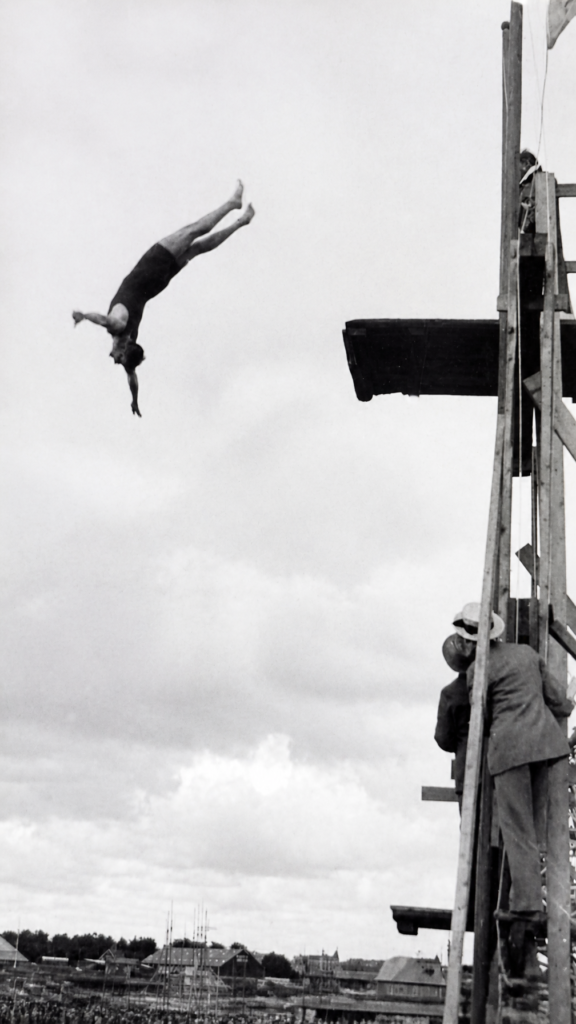
Diving in the River Nissan
The swimming competitions were a great success, and interest in the sport continued to grow. During the 1921 season, current-swimming races were held in the River Nissan, starting at Roddarbryggan and finishing at Österbro. Races starting and finishing at Laxön were also included in the competitions, which continued for several seasons.
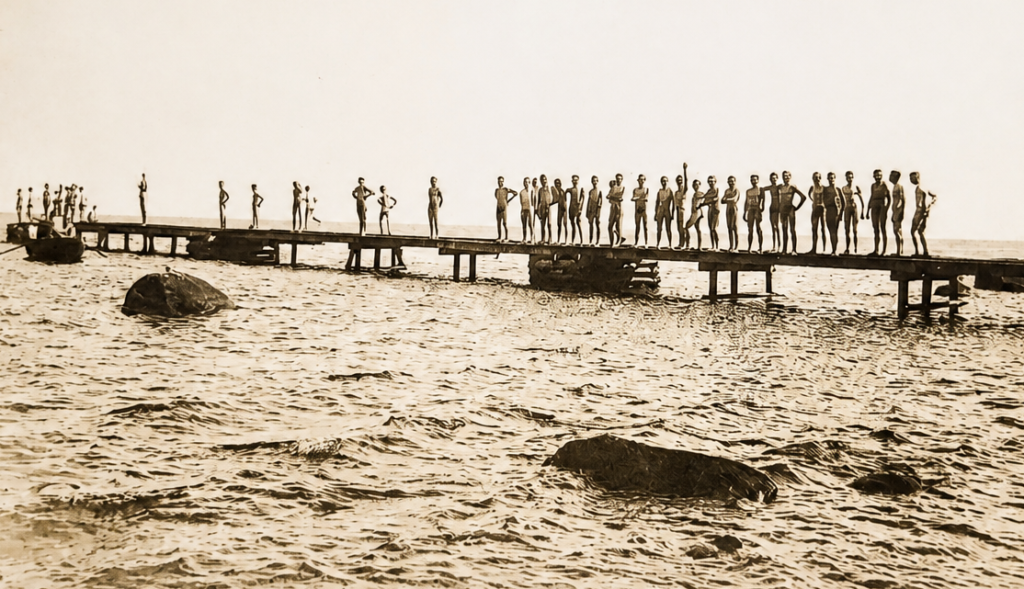
Tillmans Brygga at Brottet, soon to become the Swimming Stadium. Photo fromFolkrörelsernas arkiv.
The stone quarry at Västra Stranden was mainly created in connection with the construction of the harbour breakwaters at the beginning of the 20th century. Once abandoned, the water-filled quarries were also used by some of the local “Väster boys” for swimming practice. The site also had a long history as a bathing spot, dating back to the “sea-bathing establishment” (saltsjöbadsinrättningen) founded as a company in 1816. It had long since disappeared, but the so-called Tillmans Brygga jetty remained on the site.
HBK’s swimming section installed a diving board and some basic facilities, including removable starting and turning platforms for the 50-metre course. Swimming activities began here in 1922.
In 1923, HBK was granted a lease on Brottet, initially paying just one krona a year in rent.

Diving at Brottet in the 1930s. Photo by Otto Nilsson.

Swimming qualification ceremony at Brottet in 1935. The swimmer receiving her qualification is Greta Funcke.
In 1932, Simklubben Laxen was founded. Laxen had ambitious plans for Brottet. The club wanted to build a wall across the entire pool, with a diving platform on top. Part of the bottom would be blasted away, and a turning platform would be built. The club raised funds, and the planned facilities were completed in 1935.
Sources:
GHÅ 1925. Axel Westman. Brunnar och bad.
GHÅ 1927: En vacker levnadssaga.
GHÅ 1984. Pär Lindblad. Edgar Lindblad – Pionjär inom idrott och konsthandel.
Sven Aremar. Kors och tvärs i tid och rum. Stenbrottet som blev simstadion.
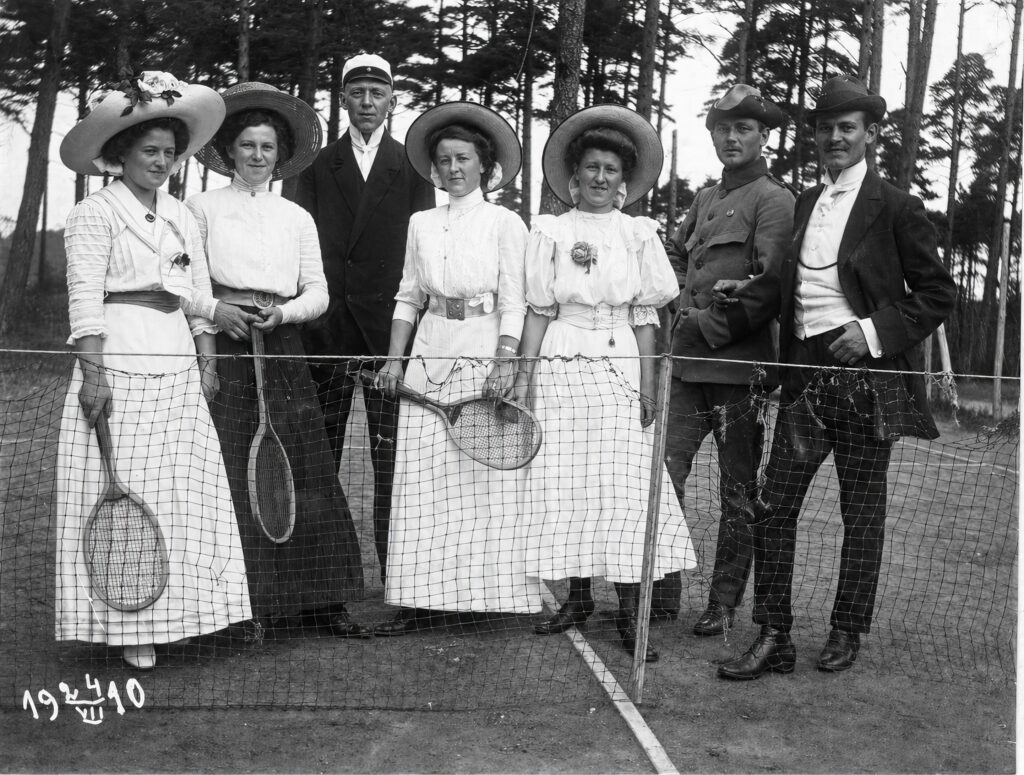
In Hallandsposten on 1 July 1887, the following was reported:
“A Lawn Tennis Club for playing Lawn Tennis, a form of English ball game, has recently been formed in Halmstad. The game, which appears to be both interesting and a pleasant form of exercise, has only recently been introduced to Swedish soil.”
IF Kamraterna’s tennis section on the tennis court at Sommarlust.
The first tennis courts in Halmstad were built by local tennis enthusiasts towards the end of the 19th century.
In the 1890s, Carl Johan Fredrikson visited Marstrand on a couple of occasions, where he saw King Oscar II playing tennis. Inspired by this, he built a tennis court beside Halmstad Valskvarn. He later recalled that the court “cost me almost nothing, as the mill workers brought soil and clay to the site and then rolled and levelled it.”
Factory owner Alfred Wallberg also built a tennis court towards the end of the 19th century situated beside his villa Ekebo on the slope leading up towards Högelid.
For a few years around 1908–1910, tennis was played in Badhusparken on a cinder court just north of the old public baths, roughly where Actic and the old swimming hall now stand.
The court was not enclosed, so the balls – which were red in those days – would occasionally fly well beyond the court. Ball boys would chase after them and, before long, began playing on the court themselves, using rather basic rackets and “found” balls. In some cases, their interest in tennis stayed with them throughout their lives.
For its time, the standard of tennis played there was quite good. Among those who played were three Österlund sisters and a number of officers from the Royal Halland Regiment, including Lieutenants Pripp and Ahrberg, whom I remember.
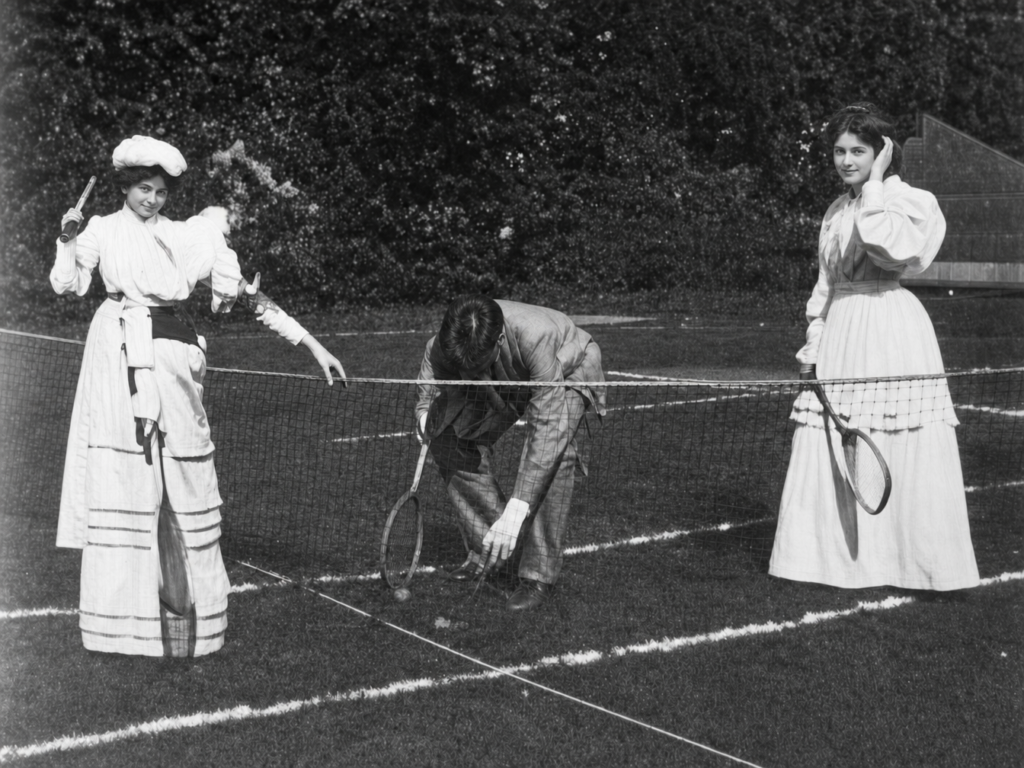
Tennis court in Badhusparken.
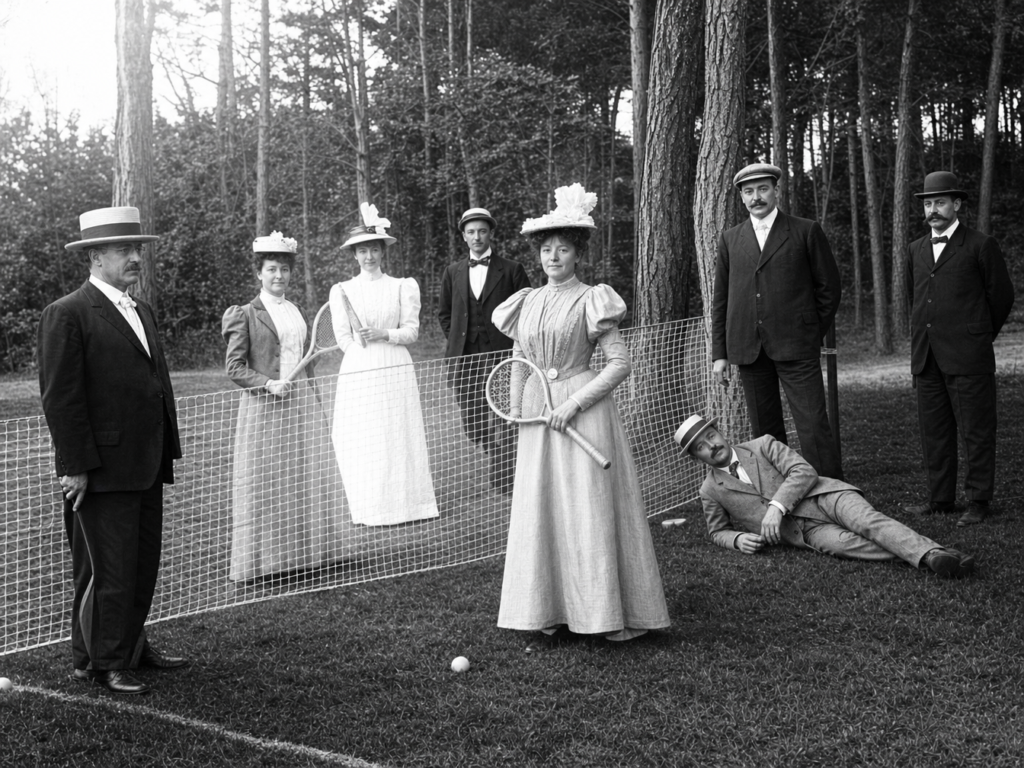
Tennis court at Sommarlust
During the spring of 1909, the sports ground at Sommarlust was completed, including a tennis court among the trees.
Örjans Vall 1922
The two tennis courts were constructed in the same way as the path at Högelid, using stone dust, gravel and soil. This was intended to make them both durable and as hard as cement, while keeping costs low.
Halmstad Tennis Hall

On 23 January 1935, members of the Halmstad Tennis Hall building association were called to a meeting at Hotel Svea. By then, Yngve Schéle, who was the driving force behind the project, had persuaded 30 people to subscribe for shares in the hall. This meant that the construction plans had been financially secured.
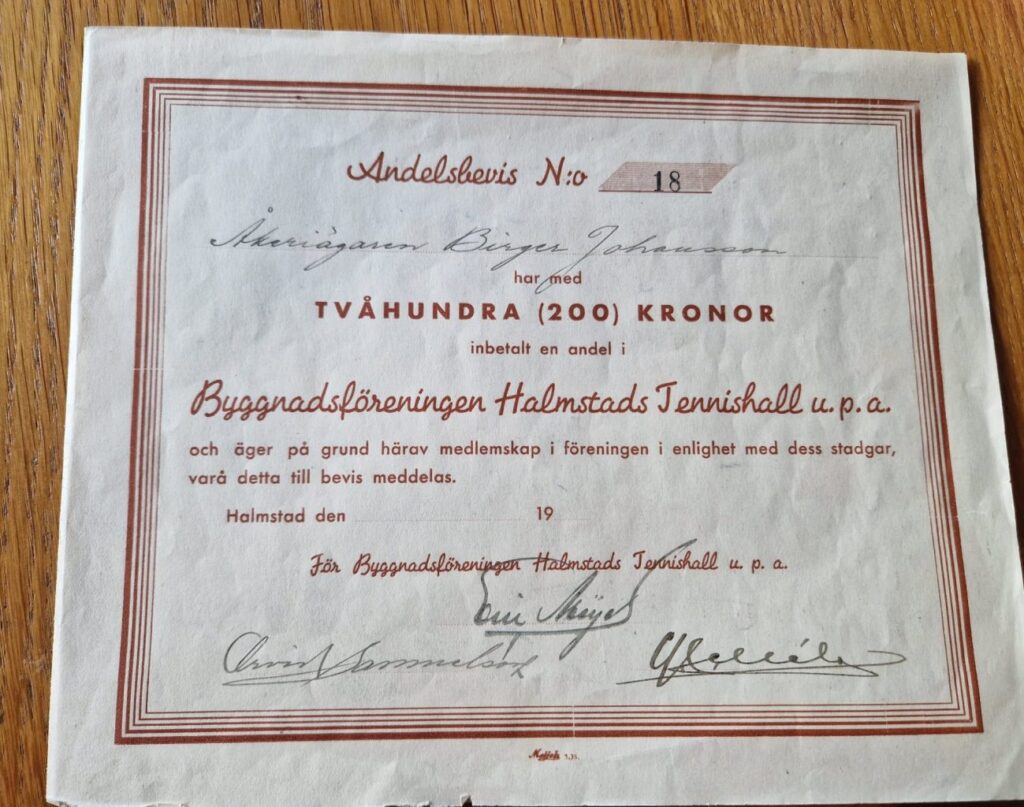
The construction firm Selfvén & Hedenberg built the hall at a cost of SEK 56,300. Heating, plumbing, electrical work and painting were additional expenses, bringing the total extra cost to SEK 21,000.
In September 1935, Hallandsposten wrote:
“The hall now ready to welcome devotees of the white sport is, in terms of space, layout and lighting, of the very highest standard.
The large and airy changing rooms, with their adjoining showers and toilet facilities, will surely be much appreciated.
This fine hall has been created for the whole of Halmstad and for everyone with an interest in sport and exercise. And there is hardly any form of exercise more enjoyable than playing tennis.
Anyone who takes up tennis will soon become a passionate devotee of the game.”
The official opening of the tennis hall took place in November 1935, performed by County Governor Hilding Kjellman. Among other things, he said:
“Tennis is a beautiful sport. A tennis match is not simply a play of muscles. It also requires precision and judgement. It requires the brain to work quickly and efficiently. Alongside good physical fitness, it requires intelligence.”
Sources:
GHÅ 1961, Fragment och spånor ur det förflutna. Några erinringar om och av C. J. Fredrikson. Av lektorn Carl-Fredrik F :son Aleman
GHÅ 1963, Sven Aremar, När idrotten kom till stan.
GHÅ 1965, Herman Kronqvist, Villa Ekebo
GHÅ 1968, Ytterligare om badhusparken
GHÅ 1975, Daniel Ceverin, Sagan om tennishallen
Sven Aremar, Ur folkmun och arkiv, Arbete i stort och smått, Wallbergarnas Slottsmöllan
Sven Aremar, Kors och tvärs i tid och rum, C. A. Freckman – dansken som gav oss Sommarlust
Sven Aremar, Kors och tvärs i tid och rum, Så fick Halmstad Örjans Vall
HTK 25 år – En historia om Halmstads tennisklubbs verksamhet de första 25 åren.
Halmstads tennisklubb 100 år.
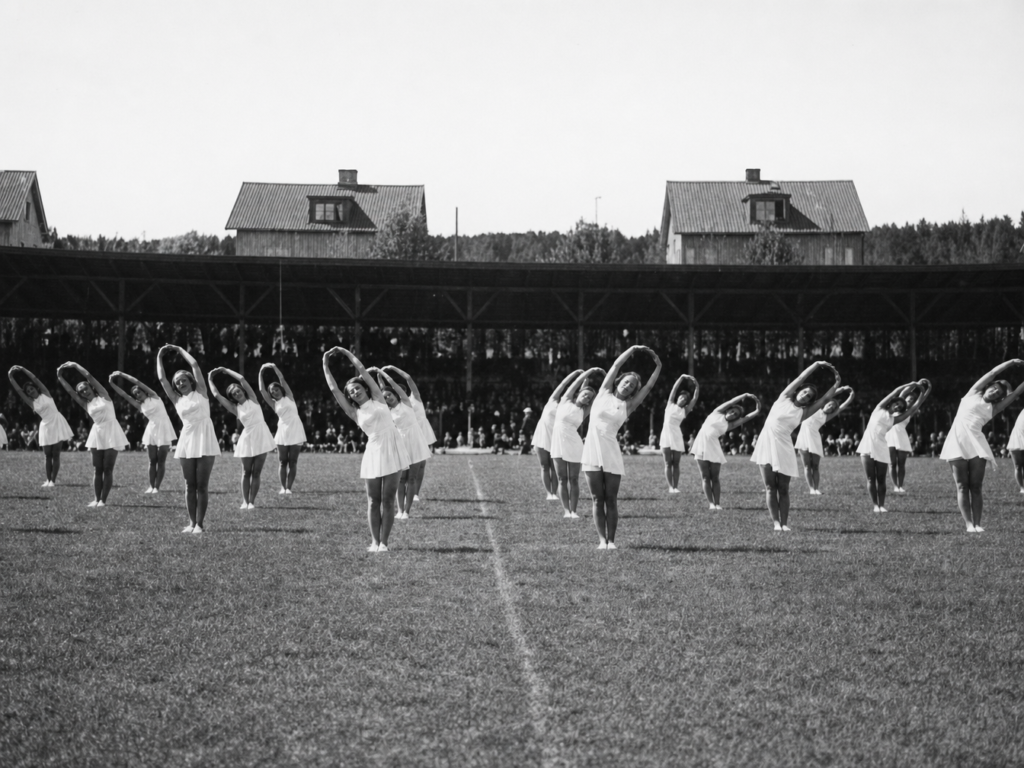
At the beginning of the 19th century, Per Henrik Ling laid the foundations of Swedish gymnastics.
Gymnastics began in Halmstad in 1843, when the town’s new public baths opened. They were located beside the River Nissan, below what is now Hotel Mårtenson. Hallandsposten wrote:
“This new establishment, the first of its kind in the town, was expected to be of great benefit not only to young people but also to the sick, who would regain their strength and health there.”
The gymnastics were led by Lieutenant J. A. Lagergren, who was much in demand for a wide range of different duties.
In May 1889, Hallandsposten reported:
“A ball games club following the English model was formed here yesterday and already has around twenty young men taking part. The club holds practice sessions at Tivolitorget on wo evenings a week.”
Hallandsposten also reported that during the winter months, this association functioned as a gymnastics club.
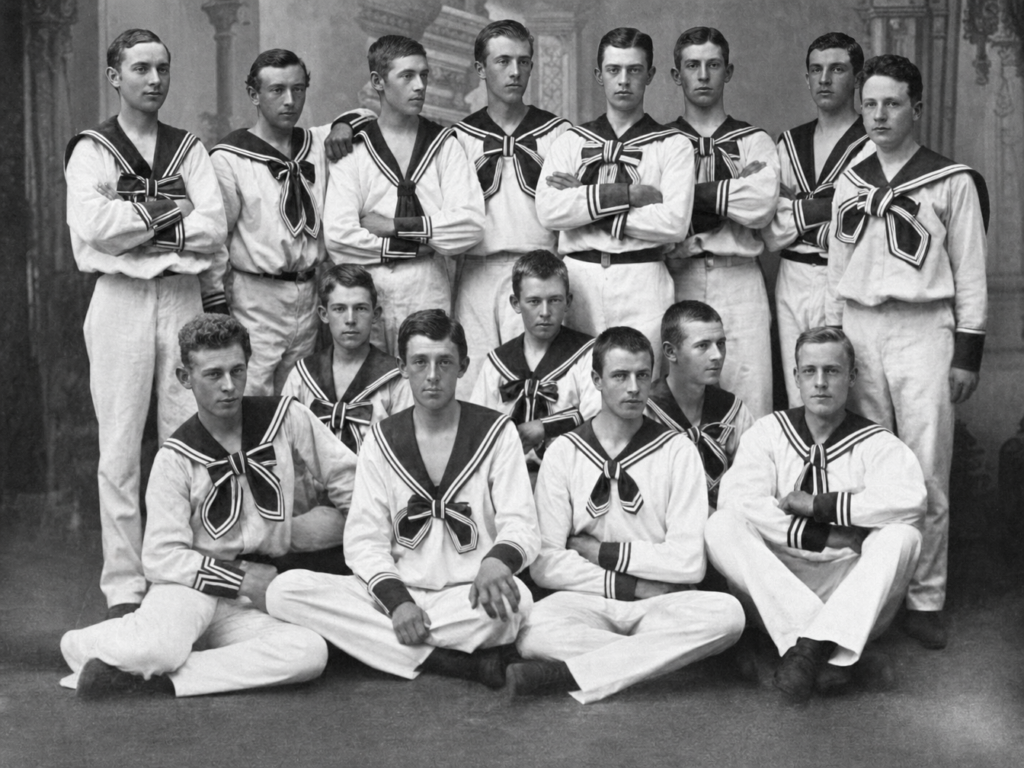
The Grammar School Gymnastics Association, 1896. Photo from Arkiv Halland
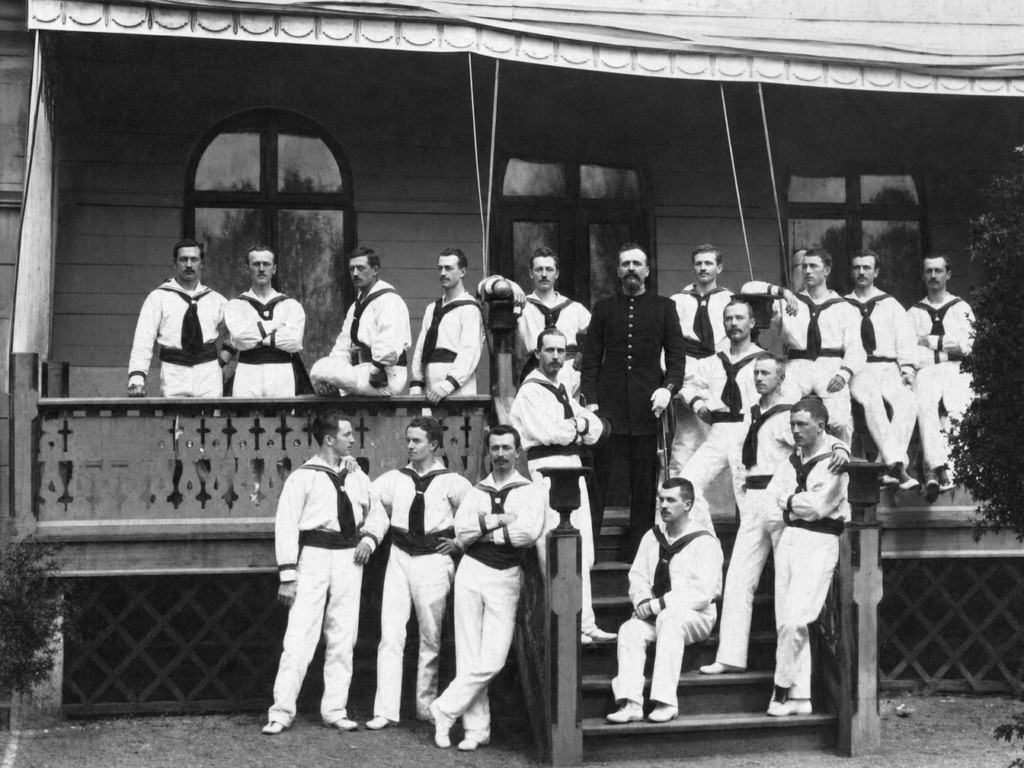
Halmstads Gymnastikförening at Villa Åkerslund
In 1892, Halmstads Gymnastikförening was founded. The driving force behind its establishment was watchmaker Herman Stenbäck, who also became its chairman. The purpose of the gymnastics association was set out in Article 1 of its statutes:
“The purpose of the association is to promote interest in and proficiency in gymnastics and other men’s sports, and through regular exercises in accordance with Ling’s system to strengthen and develop the human body.”
The Rowing Club and Gymnastics Association evidently had much in common, and on 16 May 1896 a meeting was held at Hotel Svea, chaired by Sergeant K. A. Wassenius. The two associations were merged into one, which was given the name Halmstads Gymnastik- och Roddförening.
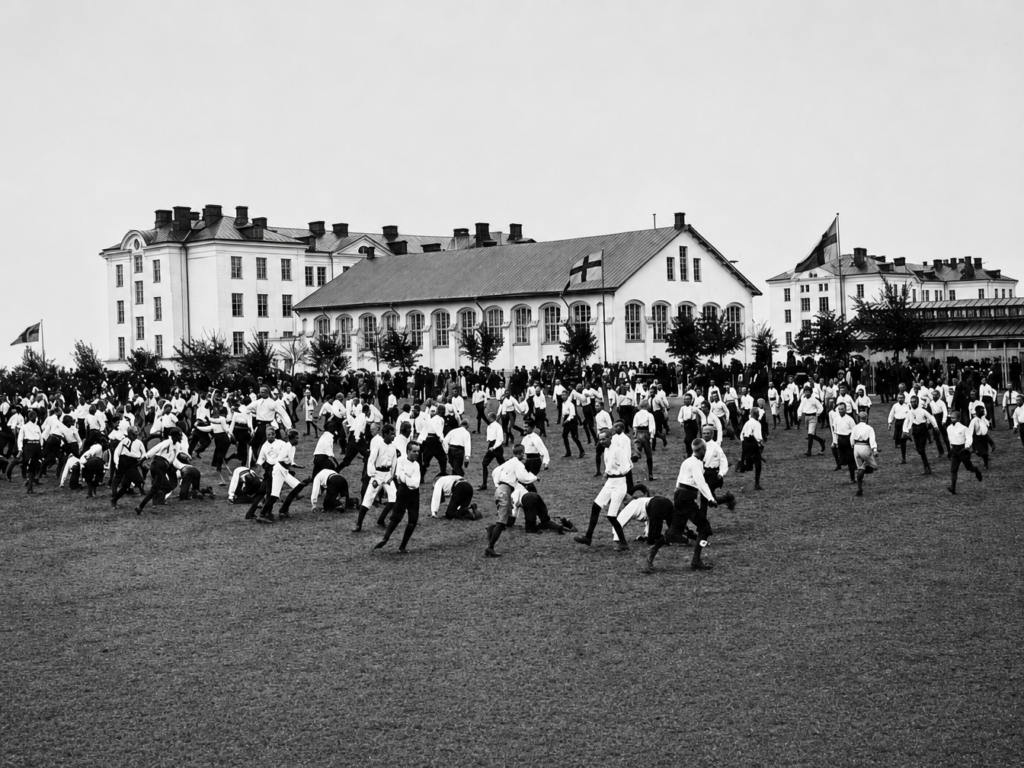
Gymnastics festival at the regiment, 1916. Photo from Arkiv Halland
Gymnastics festival, 1916. Photo from Arkiv Halland.
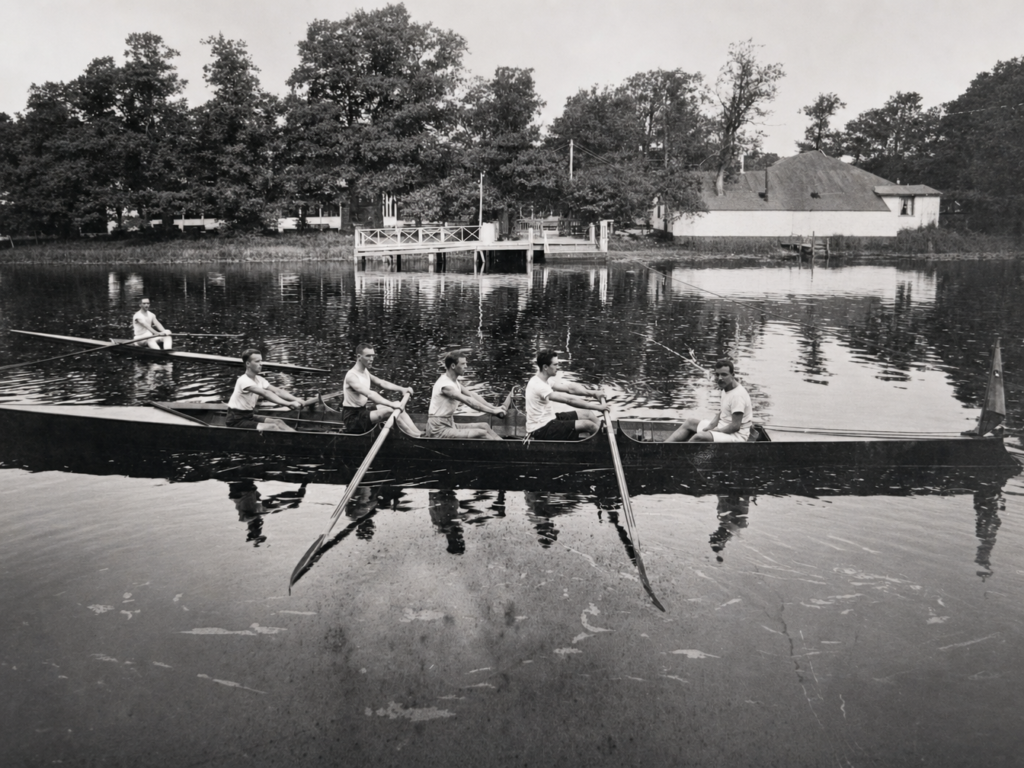
Rowing is one of the ten original sports that have been part of the Olympic programme since the first modern Olympic Games in 1896. In 1851, the Gothenburg Rowing Club was founded as Sweden’s first rowing club, followed by Halmstad Rowing Club in 1889.
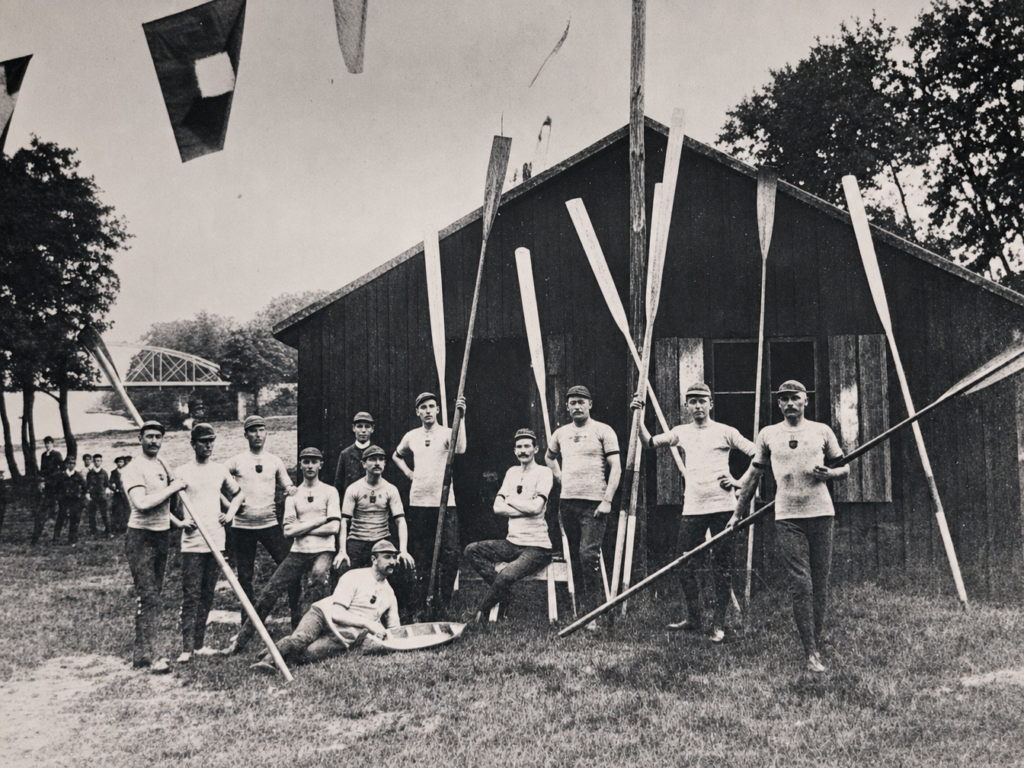
The statutes of the newly founded rowing club stated:
“The club has been established with the aim of practising rowing, encouraging an interest in the sport and developing proficiency in rowing as a strengthening and invigorating form of physical exercise during the summer.”
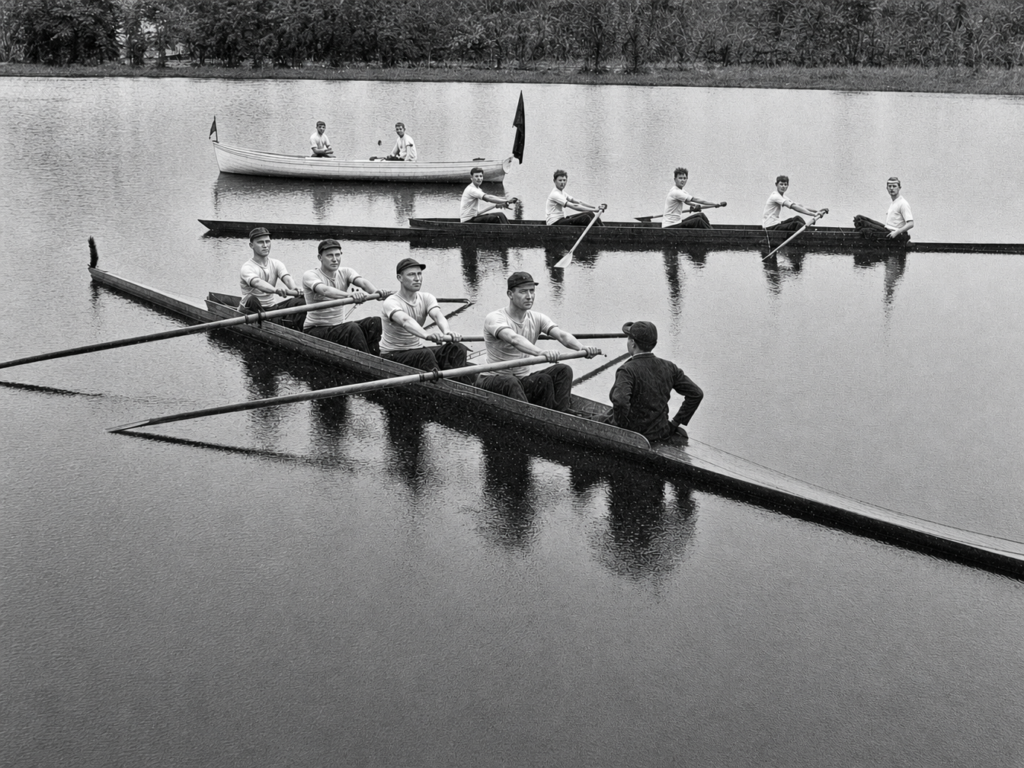
In September 1889, the rowing club organised Halmstad’s first rowing race. Hallandsposten reported:
“Halmstad Rowing Club provided the town’s residents with an altogether delightful spectacle yesterday afternoon with a rowing race. Large crowds had gathered along the banks of the River Nissan and on Österbro from early on. A little way downstream from the bridge, judge J. B. Berggren and timekeeper Lieutenant Österlund had taken up their positions.”
Rowing boat in front of Laxön
“The race was held over a marked-out course between Laxön and Österbro. The fifth race, for four-oared ship’s boats, attracted the greatest interest, as the local rowing club had entered its best rowers. The prize in the fifth race was won by the rowing club in a time of 8 minutes and 50 seconds.”
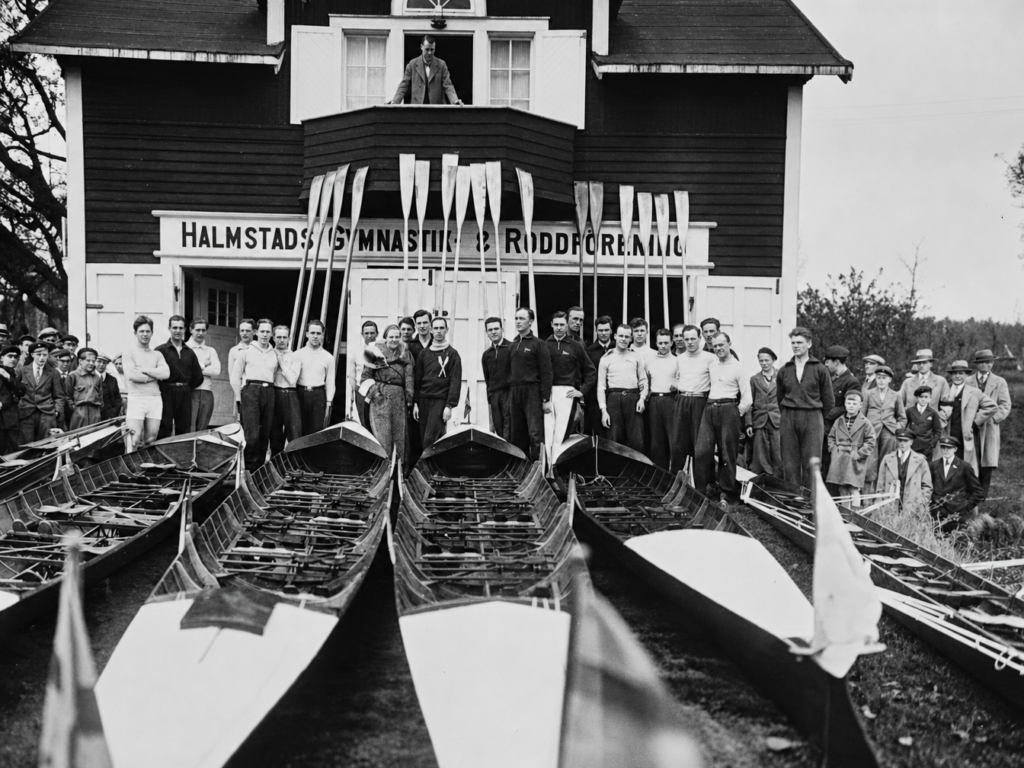
The Rowing Club and Gymnastics Association evidently had much in common, and on 16 May 1896 a meeting was held at Hotel Svea, chaired by Sergeant K. A. Wassenius. The two associations were merged into one, which was given the name Halmstads Gymnastik- och Roddförening.
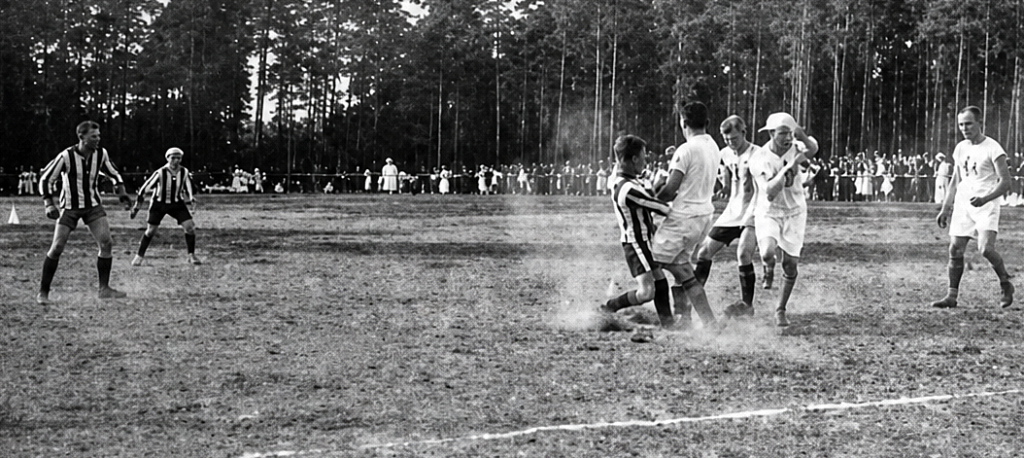
The area north of Tivolitorget was known as Såpebrukslyckan, and this is where Halmstad’s sporting history began in the late 19th century.
A club called Halmstads Bollklubb invited the Danish Akademisk Boldklub (AB) to a football match at Såpebrukslyckan on 14 September 1890. It was probably one of the first football matches played in Halmstad and the first international football match in Sweden. No common rules had yet been established, and the surprised Danish visitors noted that the Swedes were allowed, among other things, to stop the ball with their hands. Despite this advantage, the visitors won 3–0. A month later, another Danish team came to Halmstad when Köbenhavns Boldklub paid a visit.
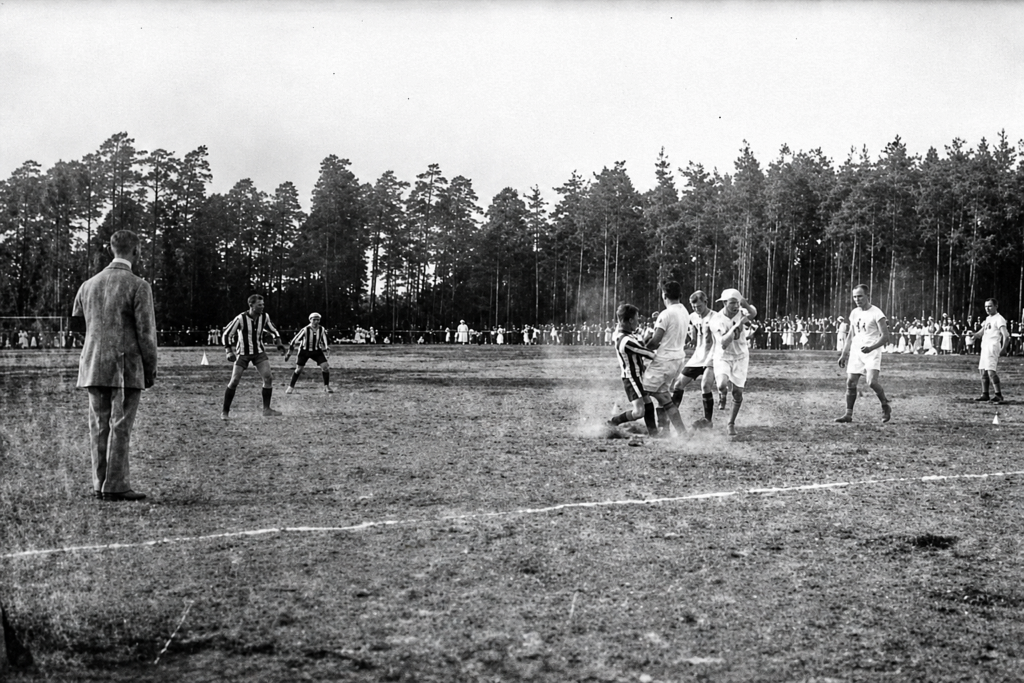
A football match at Sommarlust, probably in the 1910s.
Photo from Lars Magnus Lundgren.
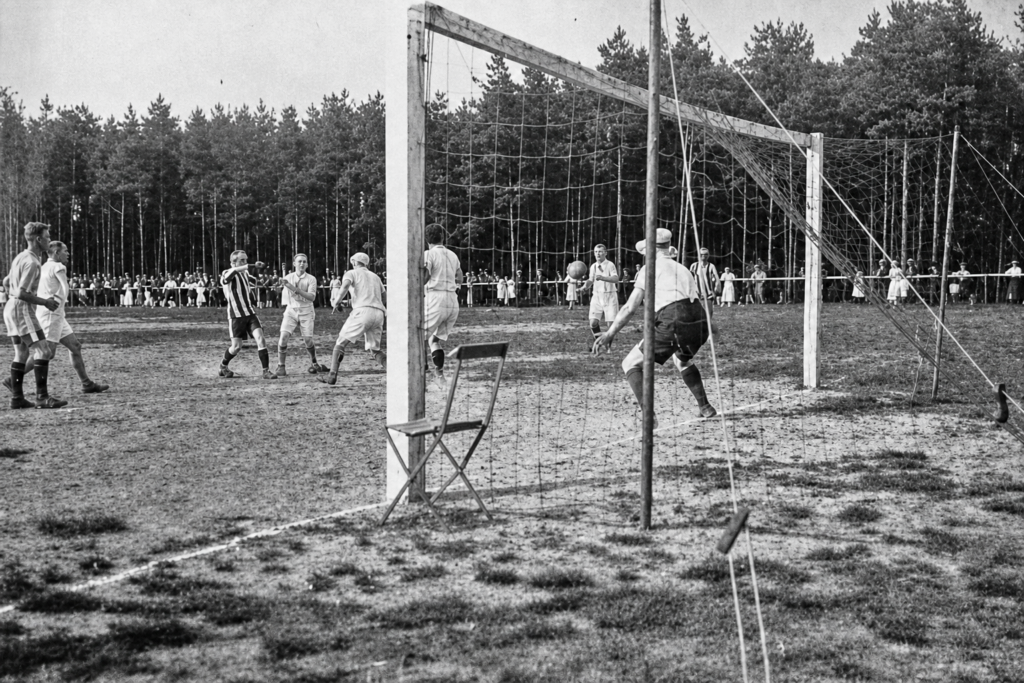
A football match at Sommarlust, probably in the 1910s.
Photo from Lars Magnus Lundgren.
In 1895, schoolboys at grammar schools around the country began forming Idrottsföreningen Kamraterna (IFK) clubs, and Halmstad was no exception. The association took part in several sports, including football.
When the Grammar School was opened in 1906, the athletes at Såpebrukslyckan were left without a sports ground. The tenant farmer at Patrikshills farm, Anders Grahm, then made land on the farm’s property available for them. This led to the establishment of Södra idrottsplatsen, which was probably located north of what is now Patrikshillsvägen.
A photograph from 1908 shows a football match in progress, but there must also have been running tracks, as a district championship was held there that year.
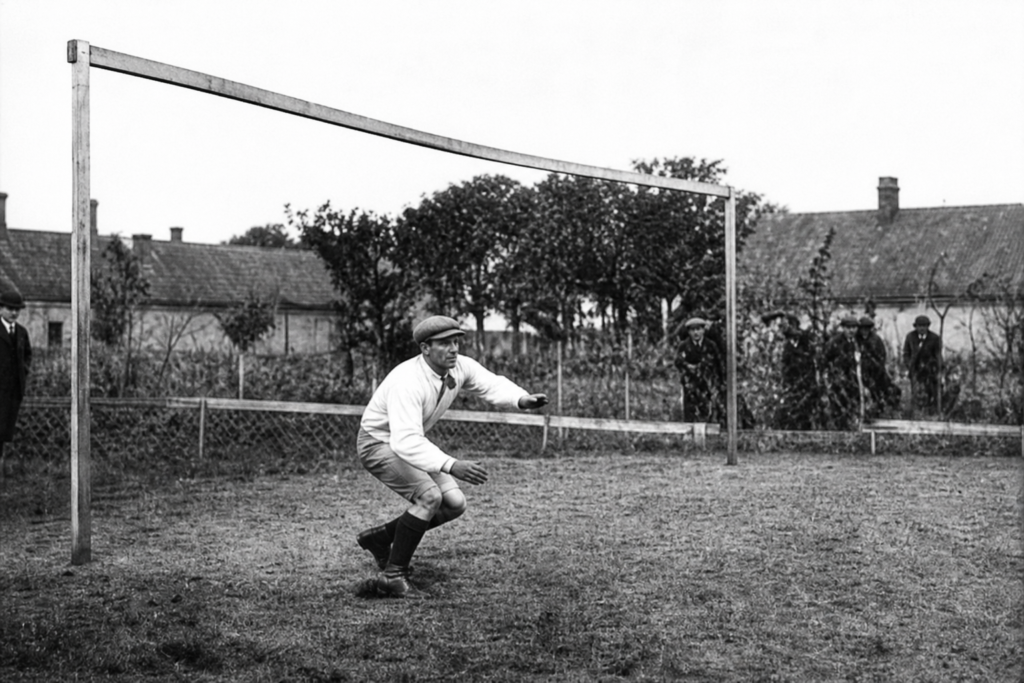
Football match at Södra sports ground, 1908.
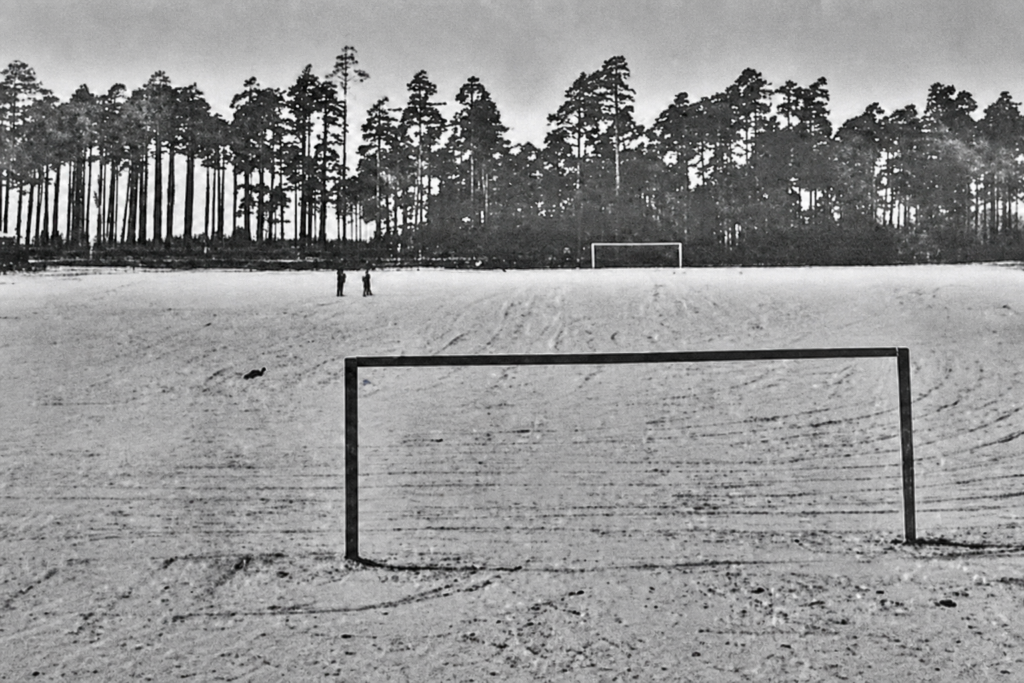
The football pitch at Sommarlust.
In 1909, Halmstad’s first proper sports ground was inaugurated at Sommarlust. At his own expense, he added a football pitch and running tracks to his place of entertainment.
Idrottssällskapet Halmia was founded on 16 June 1907 at Café Nyktran in Norre Katts park. The club grew out of several boys’ teams known as Enighet, Sparta and Halmstads Fotboll- och Idrottsklubb. It was not until the following year, however, that the name Halmia was formally adopted.
During its early years, Halmia played most of its matches on the “Fattighusplanen”, an area between the Halmstad–Bolmen railway and the former Poorhouse at Engelbrektsgatan. The pitch was described as a real rollercoaster: uneven terrain with hills, sandpits, paths and a wide ditch running through the southern part.
At the beginning of the 20th century, the field at Karl XI väg and Stenvinkelsgatan was turned into a football pitch known as Wasaplanen. The local team BK Wasa soon disappeared, and in 1914 a group of young men from the western parts of the town formed Halmstads Bollklubb. They continued to play at Wasaplanen, a bumpy pitch with no changing rooms.
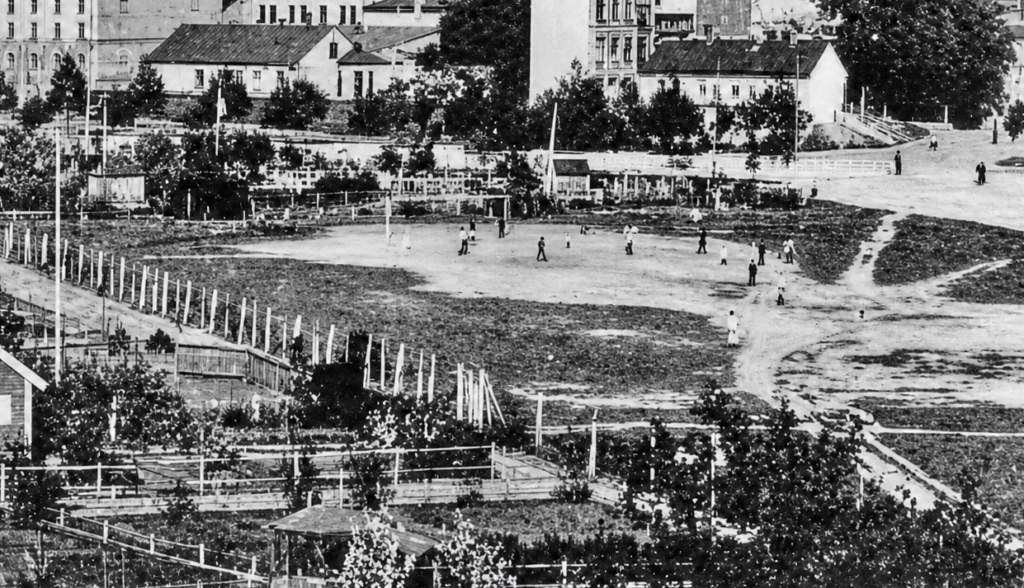
Wasaplanen at Karl XI väg and Stenvinkelsgatan.
The first match between Halmia and Halmstads BK was played in 1915, with Halmia winning 6–0. However, it was IFK Kamraterna who won the district championship that year.
Sources:
GHÅ 2010. Bertil Karlsjö. Glimtar ur Halmstads tidiga idrottshistoria
GHÅ 2013. Roy Jacobsson. Varför står inte Hasse Åkerlund i målet?
GHÅ 2017. Hans Bengtsson och Bengt Hyleen. När Allsvenskan kom till stan.
Sven Aremar. Ur folkmun och arkiv. Norra förstaden – nyttigheter och muntrationer.
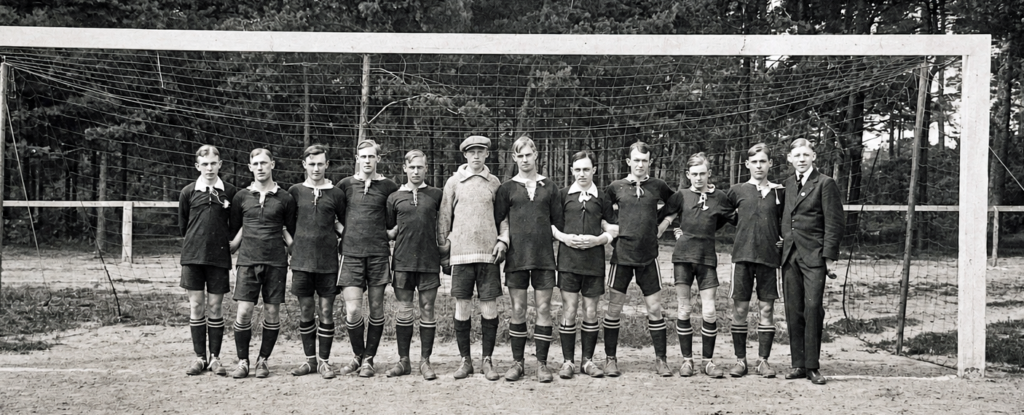
A team from Kärleken that played its matches at Sparkushålan, the meadow north of the regiment where I 16’s obstacle course was later located.
Seated from left: Hilding Bengtsson, Johan Johansson, August Bengtsson.
Standing from left: Levin Andersson, Erik Andersson, John Persson, Karl Petter Pettersson, Einar Rehngren, Edvin Tholin, Georg Olsson and Edvin Pettersson.
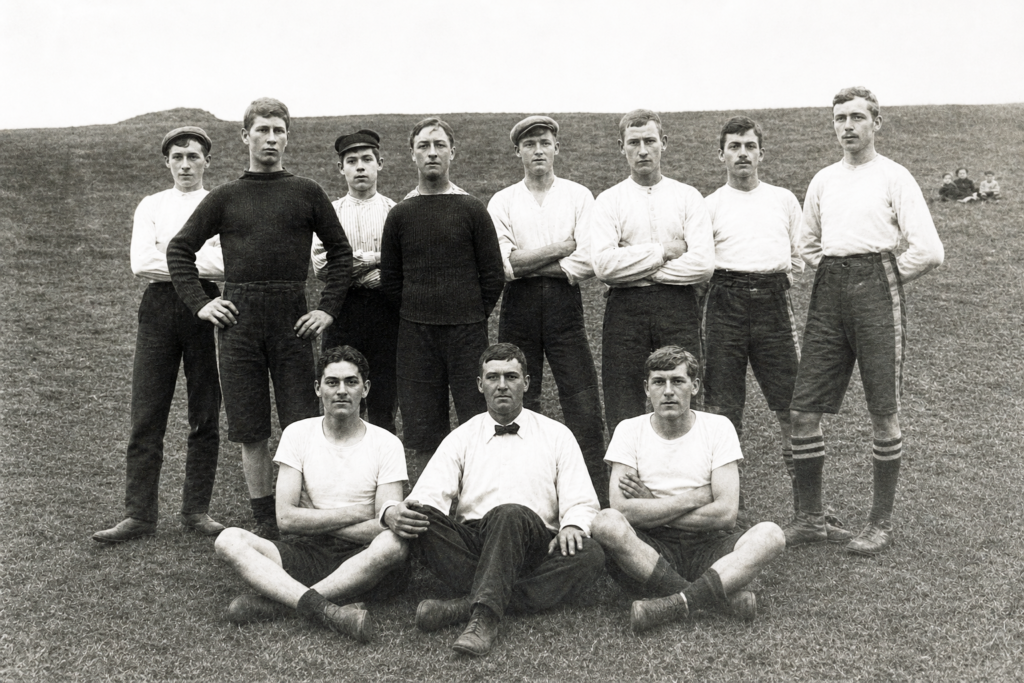
Fylgia 1907. Photo from Folkrörelsernas arkiv
The local team BK Wasa played football on the field at Karl XI väg and Stenvinkelsgatan in the early 20th century. The football pitch became known as Wasaplanen.
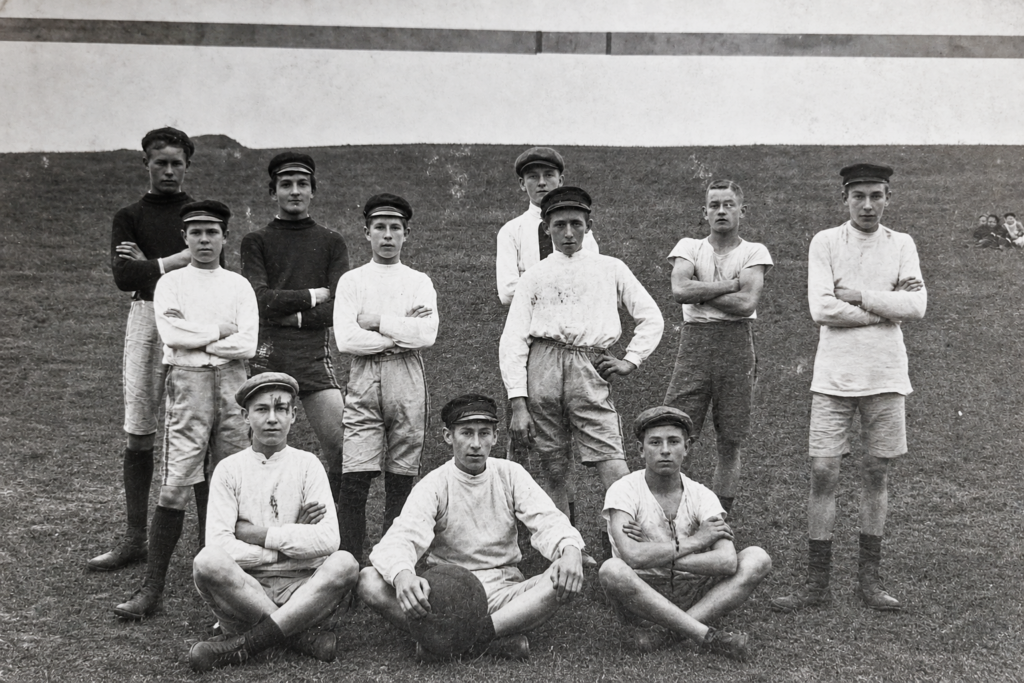
BK Wasa 1908. Photo from Folkrörelsernas arkiv
A team photograph of an unidentified football team on the football pitch at Sommarlust in 1920.
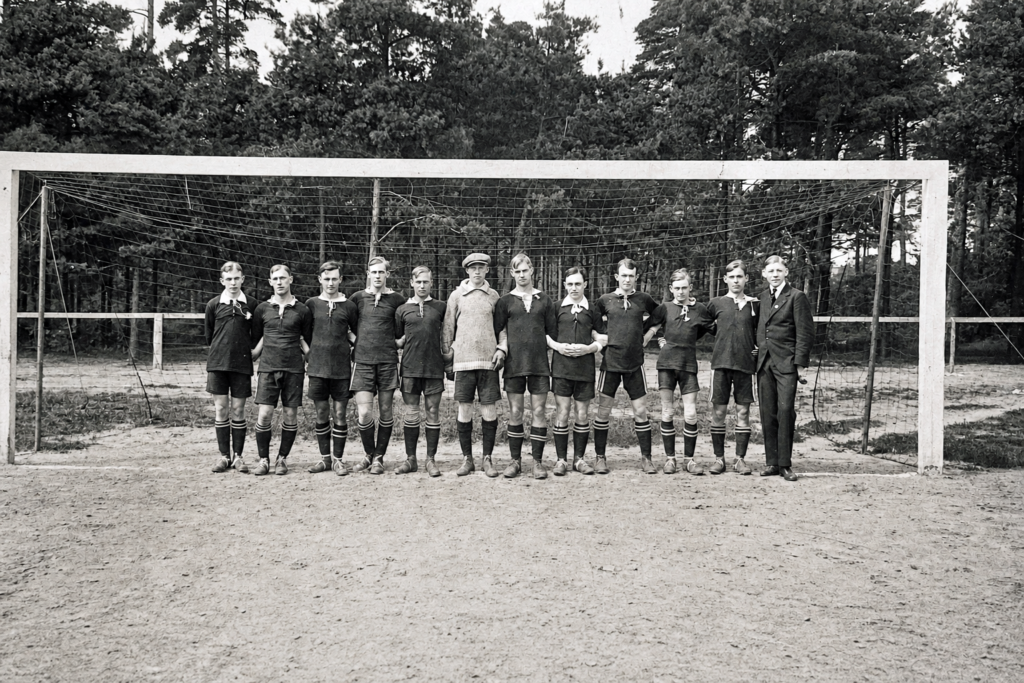
Unidentified football team, 1920. Photo from Folkrörelsernas arkiv.
A team photograph of an unidentified football team. Date unknown.
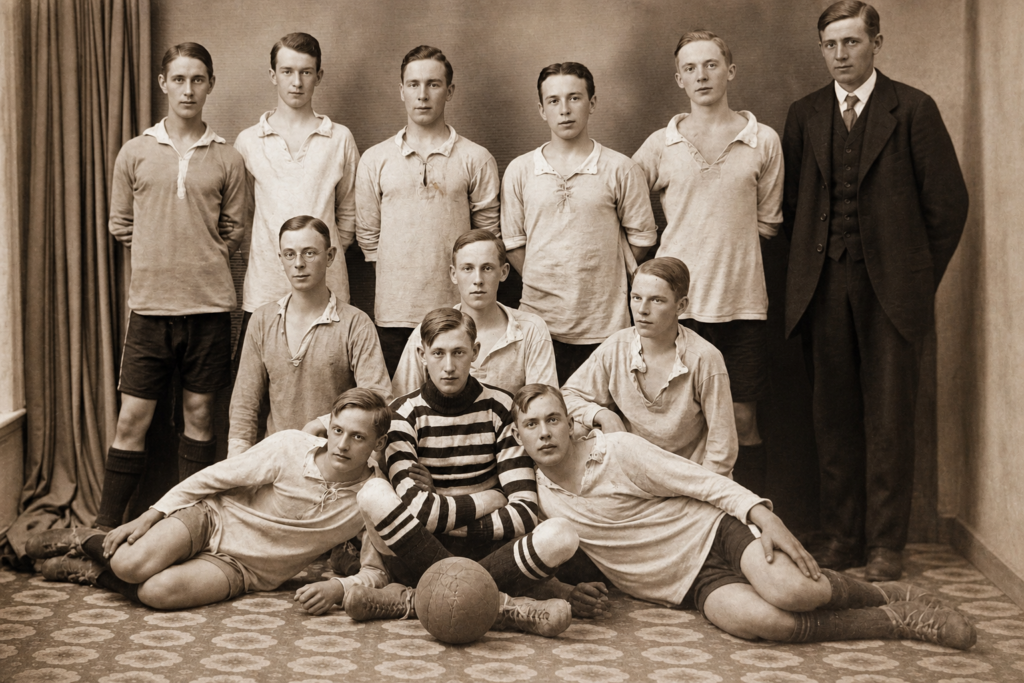
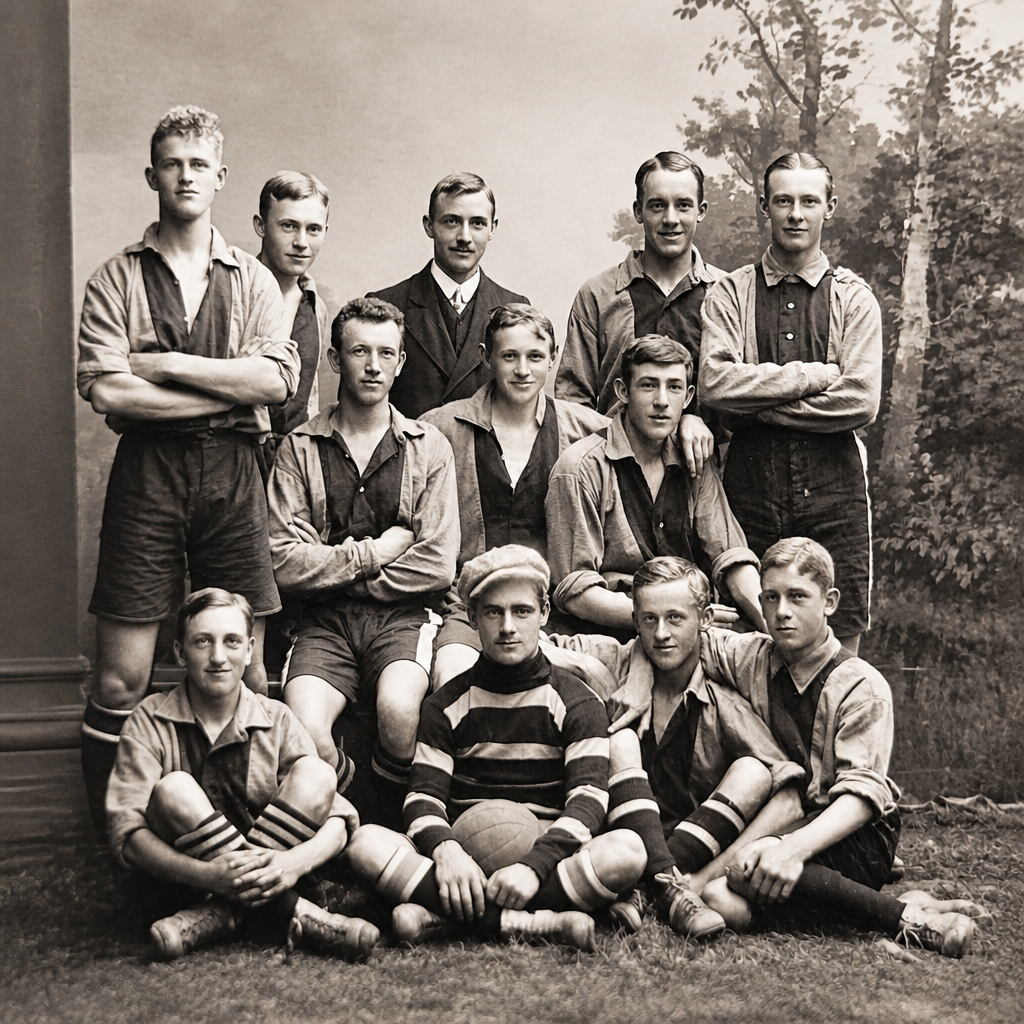
IS Halmia team photograph. Photo from Folkrörelsernas arkiv.
Halmia lined up on the football pitch at Sommarlust in 1917.
From left: E Carlsson, T Björk, D Johansson, H Forsberg, H Thomsen, K Bengtsson, H Lindgren, A Persson, E Björk, Yngve “Japan” Johansson and Gustav Pettersson.
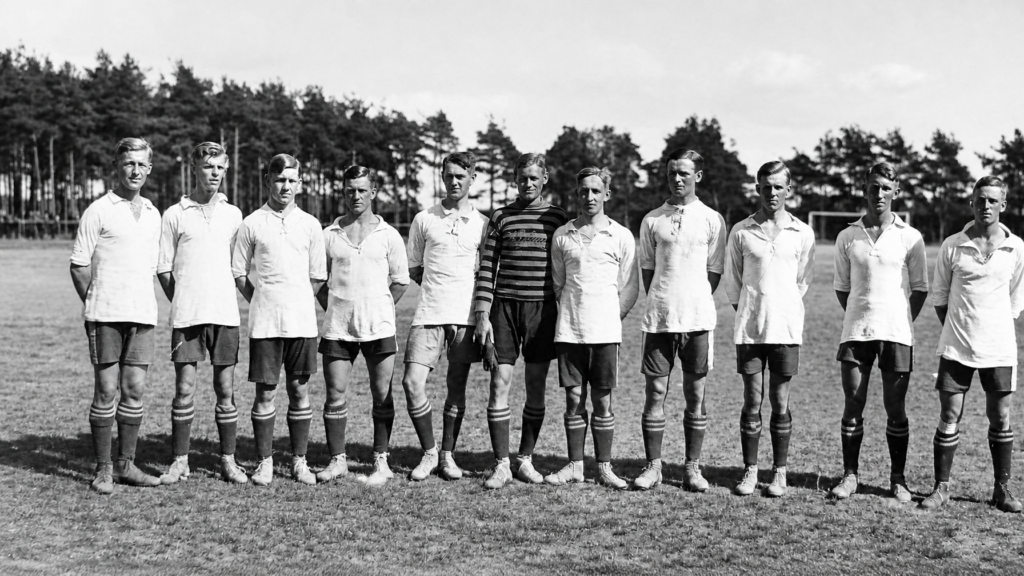
Halmia 1917. Photo from Folkrörelsernas arkiv.
Standing from left: Erik Göransson, Henry Holmsten, Gunnar Olsson, Axel Pressfeldt, Pelle Eriksson and Emil Carlsson.
Kneeling from left: Tore Svensson, Tore Karlsson, Helge Svensson, Ernst Svensson and Tiffi Åberg.
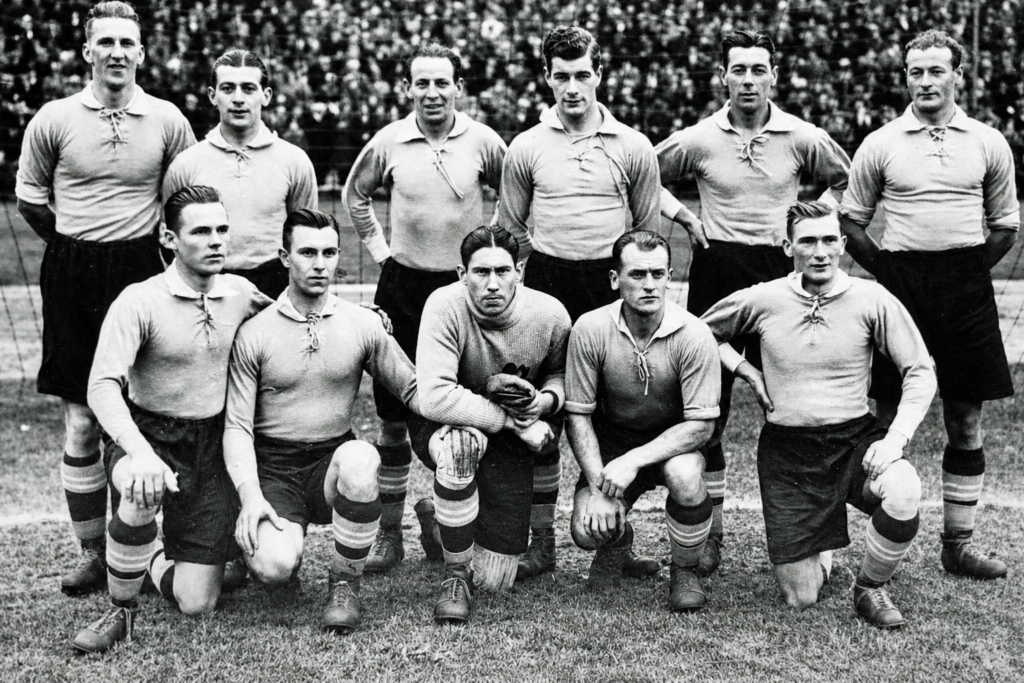
Halmstad bollklubb 1933. Photo from Folkrörelsernas arkiv.
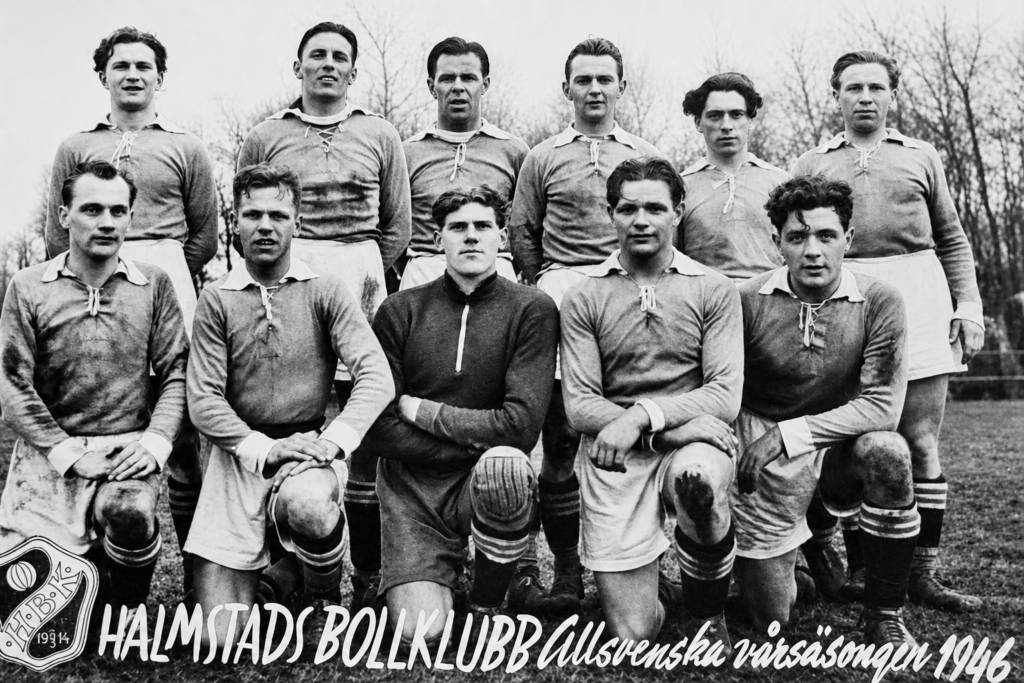
Halmstad bollklubb 1946. Photo from Folkrörelsernas arkiv.
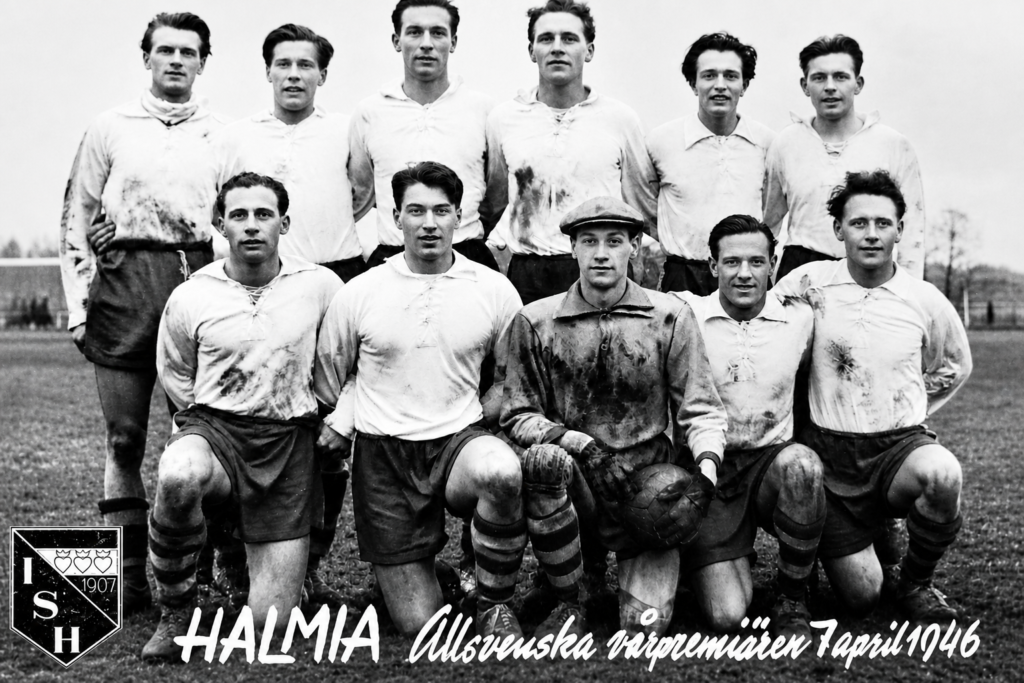
IS Halmia 1946. Photo from Folkrörelsernas arkiv.

 English

 Svenska
