The Royal Wedding of 1680
Negotiations for a marriage between the Swedish King Charles XI and Ulrika Eleonora, daughter of Frederick III of...
After the dissolution of the Kalmar Union in 1523, a long period of conflict between Denmark and Sweden began.
At the beginning of the 17th century, Christian IV transformed Halmstad into a strongly fortified town. In 1645, Halmstad became Swedish, bringing major changes for the town’s citizens as Danish soldiers were replaced by Swedish troops.
Over time, the fortifications became outdated, and Halmstad gradually lost its military importance. From the 1730s onwards, the fortifications were demolished and the town was gradually relieved of its military garrison.
Negotiations for a marriage between the Swedish King Charles XI and Ulrika Eleonora, daughter of Frederick III of...
In October 1563, Halmstad was subjected to a Swedish attack. Under the command of Erik XIV, the Swedes...
In 1554, King Christian III of Denmark issued a mandate to the towns throughout his realm, stipulating that...
Construction of the new fortifications around Halmstad began in 1598, and the project was entrusted to the Dutch...
Construction of Halmstad Castle began with the southern wing. This was followed by the western wing, which contained...
It was now six years since peace had been established between Sweden and Denmark. Sweden had paid the...
On 28 August 1619, disaster struck Halmstad. A fire broke out and reduced the entire town to ashes.
The Treaty of Brömsebro was concluded on 13 August 1645. Following its successes in the war, Sweden made...
From the archives of the Swedish War Council, Artillery Department, G III B: Inventory of all ammunition transported...
Following a Danish siege of Halmstad, a Swedish force came to the town’s relief in August 1645.
The proceedings of the Riksdag were held in St. Nicholas Church, while the Council of State met at...


Portrait of Charles XI
Negotiations for a marriage between the Swedish King Charles XI and Ulrika Eleonora, daughter of Frederick III of Denmark, had been underway throughout the 1670s. The hope was that such a marriage would create a lasting peace between Sweden and Denmark. However, war broke out between the two countries once again, and peace was concluded in 1679. The proposed marriage was addressed in a separate article of the peace treaty.
Charles XI decided that the wedding should take place in Halmstad in the greatest simplicity, far from the capital. The main reason Charles XI chose Halmstad was the complicated relationship with France.

Portrait of Ulrika Eleonora
At the end of the war, France had assumed a protective role towards Sweden. The French ambassador, de Feuquières, now expected to be the most distinguished guest at the wedding, something Charles XI did not agree with. However, when Marquis de Feuquières arrived in Halmstad to attend the wedding, the bride and groom were not there.
When Charles XI was informed that the French ambassador was on his way to Halmstad, he hastily changed his plans and instructed the Danish entourage to remain at Skottorp Castle. Charles XI also travelled there, and the wedding ceremony took place at 11 o’clock in the evening on 6 May.

Skottorp Castle
Sources:
Lena Rangtröm. En brud för kung och fosterland – kungliga svenska bröllop från Gustav Vasa till Carl XVI Gustaf,
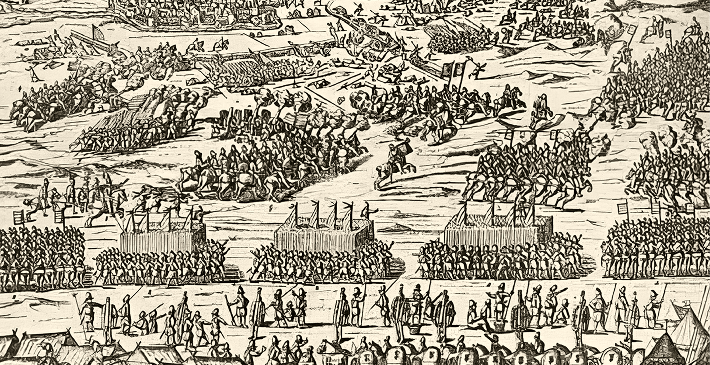
During the Northern Seven Years’ War between Denmark and Sweden, King Frederick II of Denmark passed through Halmstad in August 1563 with his army on his way to Älvsborg Fortress, Sweden’s only gateway to the western sea. The Danes captured Älvsborg as early as 4 September.
At the end of September, the army returned to Halmstad and remained there for about a week. When the army marched southwards, a garrison was left behind in the town, as it was believed that the Swedes would attempt to recapture their gateway to the western sea.
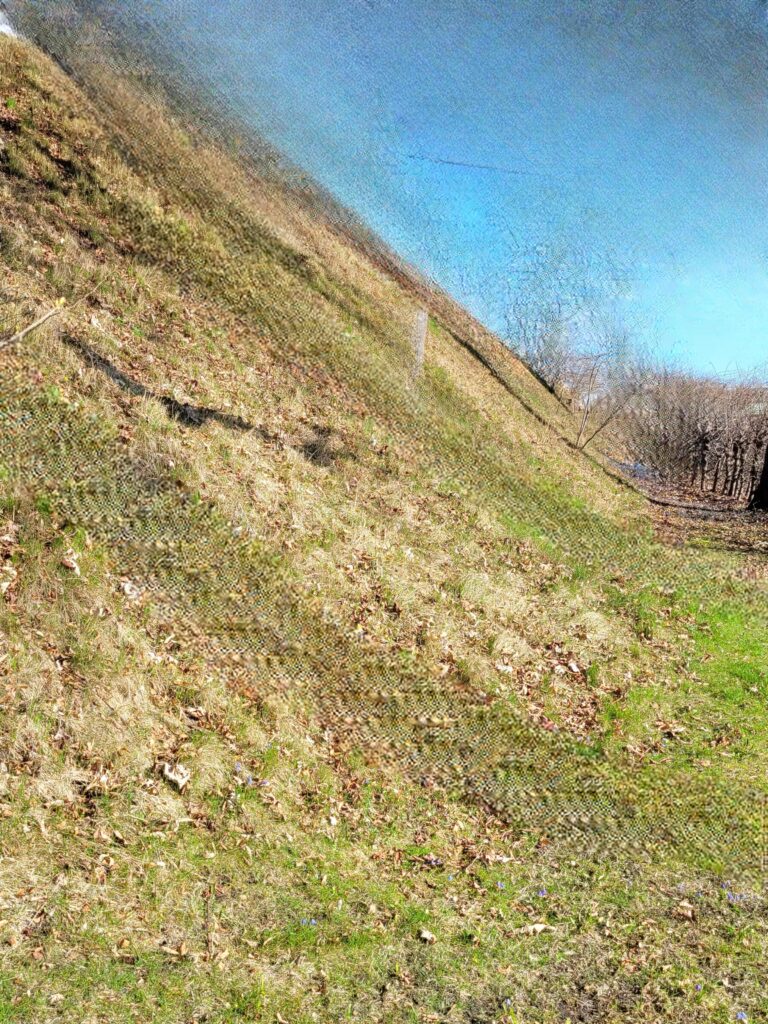
Town wall as it may have appeared in the 16th century. Photo: Sven Johansson
At the beginning of the 16th century, Halmstad had only weak fortifications. However, in 1529, the townspeople received a royal letter ordering them to fortify the town with ramparts and ditches. The farmers of Halmstad and Årstad Hundreds were also ordered to assist with the work.
Several further letters were sent during the 1540s and 1550s, urging the townspeople to strengthen the town’s ramparts, ditches, and fortifications.
In October 1563, Halmstad came under Swedish attack. At the time, the town was relatively well defended. In addition to the original garrison, two companies of infantry and a troop of cavalry had been stationed in the town, bringing the total force to around 1,300 men.
Under the command of Erik XIV, the Swedes began to lay siege to Halmstad, and the town came under heavy attack for several weeks. The Swedish army numbered approximately 20,000 men, who were stationed around Halmstad. They established fortified positions outside the northern gate, where they dug out the moat, allowing the water to drain into the River Nissan.
Erik XIV knew that the Danish army was on its way to Halmstad, but he made one final attempt to capture the town by frightening the defenders into surrender. In a letter from King Erik XIV to the citizens of Halmstad, he wrote that “if they would not surrender peacefully, he would spare neither the child lying in the cradle.”
In modern Swedish, the meaning is that, because the defenders had allowed defenceless women to take part in the defence of the town, there was now a risk that, once his forces had captured Halmstad, they would kill the women as well as everyone else inside the town if the defenders refused to surrender.

Portrait of King Erik XIV by Steven van der Meulen, Nationalmuseum.

Field cannons on wheels. Photo: Sven Johansson
The commandant of Halmstad replied: “I have neither oath nor honour to sell for money. My lord and king has not spared money on shot and gunpowder, and I intend to share and exchange these with him for as long as life, and my lord’s ammunition, lasts.”
King Frederick’s chronicle records: “King Erik was greatly angered by this and immediately ordered all his heavy guns to be positioned against the town, and began, without respite, to bombard the ramparts and walls.”
It was then, on 5 November, that a breach was made in the fortifications between Norre Port and the blockhouse, where the assault was launched. At the same time, an attack was made from the River Nissan using rafts, targeting the part of the town where there were no walls. The defenders managed to withstand the attack, but the fortifications on the northern side suffered heavy damage.

Utgrävda rester av ett blockhus i Bastionen. Foto: SvenExcavated remains of a blockhouse at the Bastion. Photo: Sven Johansson Johansson
Halmstad withstood the Swedish attempt to capture the town, and when the Danes approached with a relief expedition, the Swedes withdrew.
There are several uncertain accounts of the casualties. Swedish losses are estimated at between 500 and 1,000 men, with the majority apparently being peasant soldiers. In the besieged town, the losses appear to have been considerably lower.
In November 1563, the citizens of Halmstad received a letter from King Frederick informing them that, for a period of five years, they would be exempt from all customs duties and excise taxes in Denmark and Norway. This was granted in recognition of the citizens’ defence of their town against King Erik and the hardships they had suffered as a result of the king’s troops.
A second letter states that whenever the Swedes, and most recently King Erik himself, had camped outside the town, they had established themselves at Övraby, which was largely deserted and had been burned.
Sources:
Sven A Nilsson. Halmstads historia Del 1
GHÅ 1949. Sven Granlund. Halmstadvisan 1563. En propagandadikt.

In 1554, King Christian III of Denmark issued a mandate to the towns throughout his realm, stipulating that from then on all townsmen were to be mustered annually with their weapons. A register was to be kept of the muster, recording the names of the citizens and the weapons they possessed.
A register from 1556 has survived and is reproduced here:
Summa sumarum ere the ssom ingen harnisk haffue 82 mendt
Wdaff thisse forscrefne mendt ssom ingen harnisk haffue ere ther
eblant ssom helleborder haffue. 23 mendt
The ssom rör oc halhager haffue er ther eblant. 32 mendt
The ssom spedsse haffue er ther eblant. 6 mendt
The ssom spiud haffue er ther eblant. 21 mendt
ssaa er thenn summa lige mett then anden som nest forschreffuen staar.
Summa sumarum offuer alle bode the ssom harnisk oc ingennharnisk haffue: Ere . 119 mendt
Oc wdi blant samme 119 mendt er ther ssom helleborder haffue
Ij ensumarum. 35 mendt
Oc the ssom rör oc halhager haffue er ther eblant ij en summarum. 52 mendt
Oc the ssom spedze haffue er ther eblant ij en sumarum. 9 mendt
Oc the ssom spiudt haffue er ther eblant ij en sumarum. 23 mendt
saa er thenne summa lige mett then neste forschreffne summasumarum
Of the 119 men who were mustered, 52 were armed with firearms of some kind, either rör (arquebuses) or halhager (light matchlock guns).
The remainder carried polearms, such as halberds, spears, or pikes (spedze).
In addition, a total of 27 men were equipped with body armour (harnesk).
This was not a large force that the citizens of Halmstad could muster.
Sources:
Sven A Nilsson. Halmstads historia Del 1
GHÅ 1936. Karl Gustav Ljunggren. Två förteckningar från 1500-talet över Halmstads borgerskap.


Engraving from 1593 in Hogenberg and S. Novellanus, “Res gestae … Fredrici II”.
The oldest surviving image of Halmstad is an engraving from 1593. It depicts a fortified town with cannons and gates.
However, comparisons with written sources show that the engraving does not correspond to what the fortifications actually looked like. The same applies to an engraving from 1680 and an alabaster relief from 1598, a copy of which can be found in the gateway of Halmstad Castle.
The oldest description of Halmstad’s fortifications is found in the town charter of 1443, which states that the town’s ramparts, palisades, and ditches were to be maintained.
During excavations in 2025, remains of a blockhouse were discovered just outside Norre Port.
Photo: Sven Johansson
Later written sources tell us that, before the Northern Seven Years’ War of 1563–1570, stone structures and rounded defensive works had been constructed outside the town. They also state that there was no wall along the River Nissan. At this time, there was also a blockhouse not far from Norre Port, known as Jungfrupastejen.
In 1591, the governor of Halmstad County, Povel Huitfeldt, was ordered to clear a site for a future wall along the river, as some of the houses stood dangerously close to the riverbank. A brick kiln was purchased, and by 1594 another one had been built.
Lime and bricks were transported by sea to Halmstad, while clay and firewood for the brick kilns were brought to the town by the peasants obliged to perform labour service. The riverside wall marked the beginning of the major works to fortify Halmstad.
Construction of the new fortifications around Halmstad began in 1598, and the project was entrusted to the Dutch master builder Hans van Stenwinkel. However, he died of the plague as early as 1601. The work on the fortifications was then taken over by his close associate, Willum Cornelissen.
Both men were buried in St. Nicholas Church (S Nikolai kyrka). Hans van Stenwinkel’s tombstone is still on display in the church’s vestibule.

Hans van Stenwinkel’s tombstone in St. Nicholas Church.
This is what the town wall may have looked like. Photo: Sven Johansson
The town wall was built over a period of seven years. An eight-metre-high wall of stone and earth was constructed around the town and then covered with turf. Along the wall, eight bastions and four town gates were built.
Outside the town wall, a moat was dug, and the earth excavated from the moat was used to build up the wall. Along the River Nissan, a brick wall was constructed.
The fortifications were supplemented by a defensive earthwork on the eastern side of the River Nissan, which was completed in 1613. Some of the bastions were also raised at around the same time.
A workforce of 230 men from throughout Halmstad and Laholm Counties worked on the town wall in a system in which different work crews took turns. Both Crown tenants and peasants belonging to the nobility were included in the workforce.
The citizens of Halmstad became suppliers to the construction project, providing materials such as bar iron, nails, and spikes. Birch bark and pine beams were supplied from Sweden. The citizens of Halmstad used their ships to transport lime, bricks, and timber from Denmark.
The construction project created a great deal of work for the citizens of Halmstad, but it also generated substantial income from supplying building materials, as well as food and drink for the large workforce.
Sources:
Sven A Nilsson. Halmstad historia Del 1. Kristian IV:s stad, fästningsbygge, brand och stadsplanering.
GHÅ 1939. Axel Westman. Halmstads fästningsverk
GHÅ 1942. Bengt Bengtsson. Halmstad som fästning
GHÅ 1942. Bengt Bengtsson. Halmstad befästningsverk och slott
GHÅ 2025. Dorrit Olander von Renteln. Christian IV – regent, byggherre och kulturperson

Povel Huitfeldt was a Danish nobleman who owned Snöstorp estate and served as governor of Halmstad County in the 1590s. The road between Snöstorp and Halmstad crossed Halmstad Marsh and was often difficult to travel.
Povel therefore acquired a house in the southern part of Halmstad. He died in 1592, and three years later the Danish Crown purchased the house from his heirs so that it could serve as the residence of the governor of Halmstad County.
Some minor construction work was carried out, including the construction of a stable for 24 horses and the conversion of a room into the king’s chamber.
Between 1607 and 1609, several farms adjoining the Crown’s property were purchased. Construction of the castle then began on this land, starting with the southern wing. This was followed by the western wing, which contained a great hall and private chambers for the king.
By around 1615, the eastern wing, including the castle chapel, and the northern wing had also been completed. The northern wing was probably built on the foundations of the old farmstead that stood on the site before construction of the castle began.

Map from 1648. The castle with its garden and stables can be seen on the left.
Work on the interior of the castle continued until the Royal Meeting of 1619. It was only then that the castle can be considered fully completed.
The master builders were the same men who were simultaneously constructing the town wall around Halmstad: Hans van Stenwinkel and, following his death in 1601, Willum Cornelissen.
Sources:
Halmstad historia Del 1 – Kristian IV:s stad, fästningsbygge, brand och stadsplanering.
GHÅ 1939. Axel Westman. Halmstads fästningsverk
GHÅ 1942. Bengt Bengtsson. Halmstad som fästning
GHÅ 1942. Bengt Bengtsson. Halmstad befästningsverk och slott
GHÅ 2025. Dorrit Olander von Renteln. Christian IV – regent, byggherre och kulturperson
It was now six years since peace had been established between Sweden and Denmark. Sweden had paid the final instalment of the Älvsborg Ransom and regained Älvsborg Fortress, giving the country access to a harbour on the western coast.
Halmstad Castle and the town’s fortifications had recently been completed, and Christian IV may have wanted to show the Swedes the well-fortified town.
On 25 February, Gustavus Adolphus arrived in Halmstad. He was warmly received by King Christian, accompanied by his Council of State and two companies of cavalry. A salute was fired from the town’s fortifications as the two kings rode together into the town through Norre Port. Along the route to the castle, they were greeted by “glorious and beautiful music”.

Skattelängd för Älvsborgs lösen 1613Tax register for the Älvsborg Ransom, 1613..
The following days were marked by food and drink, as well as music and entertainment. The accounts, for example, record that in preparation for the royal meeting, 21 oxen were purchased from Vapnö and another eight from Biskopstorp. A wagon was used to transport wine from Fredriksborg to Halmstad.
Field cannons on wheels. Photo: Sven Johansson
The castle’s cannons were loaded with gunpowder, saltpetre and resin, creating what was essentially the equivalent of fireworks at the time. The negotiations that also took place, however, produced no concrete results.
The well-preserved accounts provide an insight into how the royal meeting affected the people of Halmstad.
The accounts reveal that the Swedish entourage alone arrived with 160 horses, which consumed 233 barrels of oats during the visit. The newly built castle received so many visitors that the townspeople, clergy, and prosperous farmers were required to lend out their bed linen and household utensils.
Most of the town’s citizens had guests staying in their homes. Councillor Peder Andersen had a lieutenant, the head cook, and the stable master staying with him. This can be seen in the accounts, as he requested compensation of 20 dalers for food, six barrels of Rostock beer, and a further 17½ dalers for wine.
Christoffer Smed served his guests aquavit for breakfast, German beer with the evening meal, and beer and aquavit in the evening.
These are just two examples of the expenses for which the citizens of Halmstad requested reimbursement.

Gustavus Adolphus, painting by Jacob Hoefnagel
The castle, which was entirely new and barely finished, was still being worked on right up until the last moment.
Jacob the Painter was commissioned to decorate the Frustugan (the women’s quarters).
The master mason hired Anders Rane, Christen Syll, and eleven others to pave the castle courtyard and complete the chimney in the room that was to become Gustavus Adolphus’s antechamber. They also constructed a secret chamber within the wall, which in modern terms was a toilet.
The citizen Jacob Key supplied 15 alnar of red cloth for the Knights’ Hall.

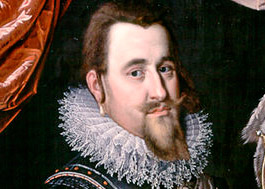
Christian IV, painting by Pieter Isaacsz
Not many women are mentioned in the accounts, but eight women cleaners are recorded. Their duties were to clean the slaughterhouse, the knights’ kitchen, and the silver chamber. Among them were Kirsten Fynes, Kerstenn Anders Rane, Johanne Falkenbergs, and Bentt Ollufsdatter.
The women cleaners were paid 10 skilling per day, which was somewhat less than the wages received by the male craftsmen.
Sources:
GHÅ 2019. Anders Bergenek. Största festen i Halmstad
GHÅ 2019. Andreas och Anna Karlsson. Inför kungamötet – skurkvinnor och målarmästare i arbete

On 28 August 1619, disaster struck Halmstad when a fire broke out and reduced the entire town to ashes. According to Jacob Richardson, a citizen of Halmstad, only three residential buildings remained standing after the fire. The castle and the fortifications, however, escaped the fire without damage.
The citizens were then prevented from rebuilding their houses immediately after the fire, as Christian IV decided that a new town plan should be drawn up. The fortification engineer Abraham de la Haye arrived in Halmstad.
His town plan was based on military requirements, with a large square where soldiers could assemble and wide, straight streets leading to the town gates. The layout of the streets and squares established in 1619 can still be seen in Halmstad today.
The fire had major consequences for the citizens of the town. Their plots of land were relocated, and when the new houses were built, they were required to have tiled roofs. In addition, no citizen was permitted to move away from the town.
In the years following the fire, Christian IV received many letters from the citizens of Halmstad complaining about the relocation and placement of their plots.

Halmstad with the new town plan.
Map from the Swedish War Archives, 1648.
The churches in Scania, Halland and Blekinge were ordered to contribute to the rebuilding of the church. However, as late as 1628, the church still had no roof, and the town requested further assistance with the work.
As an additional burden, the plague broke out in Halmstad in the summer of 1625. The church accounts list all the citizens of Halmstad who died, as the fees paid by the citizens for the funerals are recorded there. The number of recorded burials from May 1625 to April 1626 was 103. This can be compared with a normal year, when the number of burials was between 30 and 40.
Sources:
GHÅ 1967. Sven A Nilsson. Kungamöte, brand och farsot
GHÅ 2014. Mattias Öbring. Brogatans historia
Halmstads historia Del 1. Brand och återuppbyggnad

The Treaty of Brömsebro was concluded on 13 August 1645. Following its successes in the war, Sweden made far-reaching demands. One of these demands was that Sweden should be granted exemption from customs duties in the Øresund. As security for this arrangement, Sweden was to take possession of Halland for a period of 30 years. At the peace negotiations in 1658, Halland became permanently Swedish.

Caspar Otto Sperling, painting by an unknown artist
On 16 September 1645, Caspar Otto Sperling advanced towards Halmstad at the head of the Uppland Cavalry Regiment, together with infantry from the Södermanland Regiment and the Dal Regiment. Sperling and Niels Krabbe met “at four o’clock in the afternoon” in the town square, where the formal transfer of Halmstad to Sweden took place.
The following year, the process of integrating Halland into Sweden began. The Swedish government issued instructions on how this was to be carried out. The most important points were:
During the 1640s, Swedish administration was introduced, and Halmstad was given the right to send a representative to the Swedish Parliament. Government offices and the judicial system were staffed with Swedish officials, although Danish law remained in force until 1683.
However, what the people of Halmstad noticed most was the arrival of Swedish priests in the church. A sermon in Swedish was difficult for the townspeople to understand, and numerous complaints were made by the citizens of Halmstad about this.

Portrait of a 17th-century priest.

Spy map of Halmstad from 1644, Swedish War Archives.
Following Sweden’s takeover of Halland, nine companies of infantry were stationed in Halmstad. This amounted to approximately 1,000 soldiers, who were quartered both in barracks outside the town and in the homes of the citizens.
The Swedes also had to move cannons, cannonballs, and gunpowder to Halmstad, as the Danes had emptied the town of military supplies when they withdrew. An arsenal was established in the remains of the monastery at what is now Lilla Torg, where military equipment and supplies were stored. In October 1645, an inventory was made of all the weapons and ammunition that had been brought to Halmstad.
A large part of the nine companies stationed in Halmstad was shipped to Germany in June 1646.
The citizens of Halmstad made numerous complaints about the billeting of soldiers. One example reads:
“Since Captain Jörgen Helffreich was billeted with me, together with five others, and had nine horses for which he demanded hay and fodder, I provided him and his men with three meals a day for three days. He then left without giving me the slightest payment for everything I had provided for him, his men, and his horses.”
Berendt Janson, who submitted the complaint, was subsequently compensated by the Swedish authorities.

Reconstruction of a cog.
For many of the citizens, the arrival of the Swedes also created new business opportunities. Here are a few examples:
Fredrich Albechtsson supplied, among other things, oak beams and planks, as well as 1,000 barrels of lime and 12 skeppund of pork as early as 1645. One skeppund was approximately 170 kilograms.
Jöns Crämare supplied one skeppund of hops, one oxhuvud of wine (approximately 230 litres), and one barrel of prunes.
Skipper Mickel Eriksen supplied one barrel of skruvfisk (dried ling), three barrels of Danish beer, and four barrels of peas.
There are also examples of citizens of Halmstad who took part in the activities of the Snapphanar during the 1670s and 1680s. This indicates that many people in Halmstad were dissatisfied with the Swedes taking control of the town.
It was not until 1726 that Sweden trusted the people of Halland sufficiently to allow them to become part of the Swedish allotment system (indelningsverket), when four naval conscription companies were established in Halland.
Sources:
Sven A Nilsson.Halmstad historia Del 2
Sven Larsson. När hallänningarna blev svenskar.
GHÅ 1948. Sven Granlund. Halmstad garnison 1645-1646
GHÅ 1991. Stig Eliasson. Försvenskningen av Halland 1645-ca 1700

From the archives of the Swedish War Council, Artillery Department, G III B:
Inventory of all ammunition transported by sea and land to Halmstad and inspected on 27 October in the year 1645.
24 pundige
24
12
9
5
4
3
3
1
2 1/2
14
6
5
3
2
6
6
208
152
40
30
208
152
152
208
40
40
40
12
6
24
24
12
12
3
3
12
12
3
3
3
24
12
6
5
4
3
24
12
24
6
swåre halfwa Cartauger medh sine Felt låder
Lätte halfwe Cartauger medh sine Feltlåder
Fältstycken på sine Fältlåder
Metallstycken på skepzlåder
Dito på skepzlåder
Fältslunga på skepzlåder
Metallstycken fältgodz
Dito Regementsstycken på sine Fältlåder
Metall stycken på Fältlåder
Metall stycke söndersprungit
Jern stycken på skepzlåder
Dito på skepzlåder
Dito på skepzlåder
Dito på skepzlåder
Dito på Fältlåda
Dito Uthan låder söndersprengde
Nickhakar tagne pä LandzCrona
Feurmöijsser medh Låda
Pundigh Feurmöijsser medh sin Låda
Dito Feurmöijsser på sin Låda
Pundigh Feurmöijsser ser på sin Låda
Petarder
Pundige färdige Granater
Pundige färdige Granater
Pundige ofärdige Dito
Pundige ofärdige Dito
Pundige färdige Granater
Pundige ofärdige Dito
Pundige Feurkulor färdigte
Pundige fylte och färdige Hand Granater
Pundige Handgranater fylte ch färdige
Pundige färdige skrotsäckar
Pundige skrotkulor af säckarne faldne
Pundige färdige skrotsäckar
Pundige skrotkulor Uthfaldne
Pundige färdige skrotsäckar
Pundige skrotkulor Uthfaldne
Carduser heelt färdige medh behör
Pundige Carduser ifylte och ledige
Pundige Dito heelt färdige med behör
Pundige Dito med kulor bundne
Pundige Carduser helt ledige
Pundige Runde Lodh
Pundige Runde Lodh
Pundige Runde Lodh
Pundige Runde Lodh
Pundige Runde Lodh
Pundige Runde Lodh
Pundige Pijke Lodh
Pi jke Lodh
Koppar Handgranater
Pundige Öfwerlöps Låder
Pundige Öfwerlöps Låder
12 och 24 Pundige Förställar
Rustwagnar
Kulowagnar
Blåkwagnar
Carduse Kärror
Nya Wagntäcken
Gamble Dito
Nya Kutze Betsel med läderhufwudstellen
Kutze Selar
Förselar stycker
Hinderselar
Tampe Selar
Selar Uthan strenger
Hesteskoor Gånger
Hesteskoor Söm Gånger
Hesteskosöm i Halmstad tillslagne
Swenskt krut heele Tunnor
Danskt krut som omgöras skall
Lunta store Bunt
Nya Muschetter
Gamble Musketter förbet
Muskette Pijpor söndersprengde
Nye Pijkar
Gamble Pijkar
Nya Pigstoler
Garnble söndrige Pigstoler par
Nya Pigstole Hölfster par
Gamble Pigstole hölfster par
Jernpannor
Lodheformar
Stöpeslefwar
Blylodzättinger och kistor uthi hwar 1500 kulor
Noch dessföruthan Blylodzstycken
Tackor bly eller store stycken ostöpte
Stormkädior
Jernslagh
Feurcrantzar
Antimonium skålp
Kopparplåtar
Jernplåtar
Nya Underwärior
Gamble förbrutne Underwärior
Nya Bardisaner
Gamble Dito
Nya Stormhattar
Springwågejern
Stångejernstenger
Firkantige jernstenger
Runt Bolte Jemstenger
Skene Jernstenger
och tillkommit Jern ifrån Jönekiöping med Leutnampt Peder Blank In Aprilj 1646
Stånge Jernstenger
Firkantigt jemstenger
Runt Bolte Jernstenger
Skene Jern stenger
Röte Jernstenger
14” Tum Spijk som hafwer warit med i Skåne
8 Tum Spijk
6 Tum Spijk
4 Tum Spijk
3 Tum Spijk tel
4 Tum Spijk i Halmstadh slagne
3 Tum Spijk
Styck
11
2
8
1
1
1
2
19
3
1
2
2
2
4
1
3
11
1
1
1
1
15
20
12
39
31
60
50
30
180
467
152
850
237
760
208
400
29
210
62
130
570
3630
1688
672
428
32
277
366
36
113
2
3
22
73
23
10
16
18
69
78
37
641
161
48
93
491
50
50 gånger
287, schålp 191 1/4
10 halftunnor
1046 små bunt
428
690
36
968
366
205
16 1/2
119
26 1/2
3
13
2
97 st
750 st
16
92
54
14
8
3
3
1840
490
35
27
135
3
54
660 3/4
48 1/2
65
86
28
5
32
8
936 st
871 st
3680 st
1745 st
2400 st
687 st
314 st
Sources:
GHÅ 1948. Sven Granlund. Halmstad garnison 1645-1646

On 13 August 1676, Major General Jakob Duncan arrived in Halmstad with six battalions of infantry and a cavalry regiment under Lieutenant Colonel Münchhausen, as well as three twelve-pounder cannons, two mortars, and three regimental guns. The Danes immediately began constructing trenches.
Governor Johan Hård sent an urgent message to King Charles XI, warning that without reinforcements the town might be forced to surrender. Charles XI then set out from Växjö with 23 squadrons of cavalry and six brigades of infantry—3,000 cavalrymen and 2,000 infantrymen.
The march began on 14 August, and on the morning of the 16th the army reached Knäred. By then, both the men and horses were exhausted. Nevertheless, they continued their march towards Halmstad, while the Danes began their retreat southwards.
After a few hours’ rest in Eldsberga to allow the troops to eat and recover, the Swedish army resumed its march northwards.

Charles XI, painting by David Klöcker Ehrenstrahl, Nationalmuseum
When Duncan received news that a Swedish force was advancing, he lifted the siege and withdrew southwards towards Laholm in an attempt to avoid being trapped.
General Rutger von Ascheberg was sent ahead with 300 men. When they reached the River Fylleån, the Swedes saw the Danish force drawn up in battle formation near Snöstorp. Duncan decided to advance against the Swedes, who were still marching in column.
It had been a dry summer, and the water level in the River Fylleån was low, so the Danes were able to cross the river without difficulty.

Rutger von Ascheberg, lithograph by Alexander Clemens Wetterling.
The Swedish advance guard withdrew and took up a position between two marshes, where they delayed the Danish advance long enough for the Swedish infantry to arrive, just as the Danes launched their attack.
The Battle of Halmstad, painting by Johann Philip Lemke, Nationalmuseum.
The battle developed into close-quarters combat between the infantry forces. It lasted for less than an hour before the Danish lines broke and the surviving Danes fled inland. They were probably pursued by the Swedish cavalry, who killed and plundered the fleeing Danish soldiers.
During excavation work at two locations in Snöstorp, human bones have been found that could possibly belong to Danish soldiers who were fleeing from the battle. However, no archaeological excavations have yet been carried out.
The Swedish casualties were reported as 41 killed and 147 wounded. Danish losses were estimated at around 1,000 men, both killed and wounded. In addition, 1,650 Danish soldiers were taken prisoner. Of the Danish army of 3,000 men, only between 500 and 600 returned to Denmark.
This was the young Charles XI’s first battle, and the decisive victory gave both him and the Swedish army confidence in the continuing struggle against Denmark.
Charles XI later wrote: “After the fortunate victory that God granted us, we marched with the army back into the town, and it was quartered in the nearest areas on the other side of Halmstad.”
For the people of Halmstad, the siege lasted only a few days. After the battle, the Swedish army marched through the town and was quartered on the other side of the River Nissan. Charles XI entertained all the captured Danish officers at a banquet at the castle before they were sent inland. After spending a few days in Halmstad, the army marched northwards, leaving approximately one thousand soldiers behind as a garrison in Halmstad.
Sources:
GHÅ 2018. Anders Aili. Utgrävningar skapar klarhet om slaget vid Fyllebro
GHÅ 1975. Erik Hägge. Femton avgörande minuter i svensk historia
ALE Historisk tidskrift. Daniel Borgman. Slaget vid Halmstad 1676 – några taktiska reflektioner

The Scanian War was underway, and when Charles XI called the Riksdag in February 1678, Halmstad was chosen as the meeting place because of its proximity to the theatre of war in Scania.

Söderling’s map of Halmstad, 1695
Despite protests, 77 nobles, 36 clergymen, 58 burghers, and 108 peasants gathered in Halmstad, where the Riksdag opened on 3 February 1678. For those travelling from northern Sweden, the journey to Halmstad was a long one. They had to travel by sleigh, carriage, or on horseback, as the sea route was closed during the winter.
Together with clerical staff and servants, some 350 people required accommodation and meals during the month-long session of the Riksdag.
The deliberations of the four estates took place at different locations throughout the town. The nobility met at the house of Jacob Broddesson, the clergy in the church, and the burghers in the town hall. It is not known where the peasant estate held its meetings.
Halmstad Church
The proceedings of the Riksdag were held in St. Nicholas Church, while the Council of State met at the castle, where the various committees also held their meetings.
The discussions at the Riksdag were dominated by the poor state of the country’s finances. The war was expensive, and more revenue and soldiers were needed. No major decisions were taken before the Riksdag closed on 1 March.
The reduction of noble estates that Charles XI wanted to introduce, and which had been discussed at the Riksdag, was carried out two years later at the Riksdag of 1680.
Sources:
Halmstad historia Del 2. Från freden i Roskilde till freden i Lund.
GHÅ 1977. Lars Trulsson. En riksdagsman i Halmstad
GHÅ 1977. Erik Hägge. Halmstadriksdagens eftermäle i protokollen

 English
 Svenska